Skip to content
Skip to navigation menu


Prof Trevor Dale  -  PhD


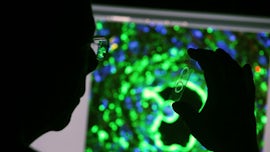
Wnt signals induce cancerous changes.

Wnt signals induce cancerous changes.

Wnt signalling, the β-catenin turnover complex and oncogenic changes

We study the mechanism by which Wnt ligands regulate β-catenin / TCF-dependent transcription. In the absence of Wnt ligands, the beta-catenin protein is degraded through the action of a multiprotein beta-catenin turnover complex. We are taking two overlapping approaches to the study of the function of the β-catenin turnover complex. The first is to assemble the complex from purified components and to study its biochemistry and structure. The second is to study the composition of the complex using proteomic techniques in vivo.


Wnts regulate normal development. In the mammary gland, some Wnt family members are involved in the control of lobular development.

Wnts regulate normal development. In the mammary gland, some Wnt family members are involved in the control of lobular development.

We are particularly interested in studying how β-catenin turnover is altered following Wnt ligand binding at the cell surface and following oncogenic mutations. Both Wnt ligands and oncogenic changes stabilise β-catenin and activate β-catenin/TCF-dependent transcription. We are keen to understand how these changes alter the composition and interactions between complex components such as APC, Axin and CK1.

Recent work funded by Cancer Research UK has focused on the kinase GSK-3 that plays a central role in targeting β-catenin for degradation within the beta-catenin turnover complex. In collaboration with Laurence Pearl (ICR), we determined the structure of GSK-3 and a complex between GSK-3 and Axin. These studies have provided important insights into the mechanisms underlying GSK-3 substrate recognition and regulation.

GSK-3 - Axin complex.

GSK-3 - Axin complex.

We also study the regulation of Wnt signalling in the mammary gland in work funded by the Breast Cancer Campaign. The prototype member of the Wnt family (Wnt-1) was originally identified as a mammary oncogene and causes dramatic pre-cancerous changes in mammary epithelium (see picture). The long-term aim of the biochemical and in vivo studies will be to design therapeutic approaches that restore β-catenin turnover or interfere with the action of stabilised β-catenin in tumours.
In the absence of a Wnt signal, the b-catenin turnover complex enhances b-catenin, N-terminal phosphorylation by CK1 and GSK-3. This generates a recognition signal for components of the ubiquitin ligase pathway leading to the destruction of b-catenin. In the presence of Wnt ligands, the function of the b-catenin turnover complex is impaired through the action of the dishevelled protein leading to the accumulation of b-catenin which then translocates to the nucleus and acts as a co-transcription factor with members of the TCF DNA binding protein family. Mutations to Wnt, Axin, APC, b-catenin and TCF family members have been shown to induce tumours and activate TCF-dependent transcription. Other signalling pathways that are independent of b-catenin are activated by Wnt signalling. These included the tissue polarity pathway and the Ca2+ -dependent pathway.

In the absence of a Wnt signal, the b-catenin turnover complex enhances b-catenin, N-terminal phosphorylation by CK1 and GSK-3. This generates a recognition signal for components of the ubiquitin ligase pathway leading to the destruction of b-catenin. In the presence of Wnt ligands, the function of the b-catenin turnover complex is impaired through the action of the dishevelled protein leading to the accumulation of b-catenin which then translocates to the nucleus and acts as a co-transcription factor with members of the TCF DNA binding protein family. Mutations to Wnt, Axin, APC, b-catenin and TCF family members have been shown to induce tumours and activate TCF-dependent transcription. Other signalling pathways that are independent of b-catenin are activated by Wnt signalling. These included the tissue polarity pathway and the Ca2+ -dependent pathway.