Biomedical Sciences with a Foundation Year (BSC)
- Subject area: Biomedical sciences
- UCAS code: BC91
- Next intake: September 2026
- Duration: 4 years
- Mode: Full time

Why study this course
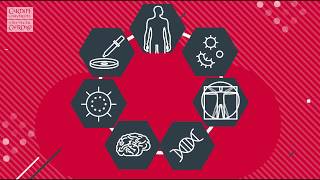
Immerse yourself in our Biomedical Sciences degree, where you’ll explore significant developments in biomedical research and the treatment of diseases. Working at the cutting-edge of research, biomedical sciences can bridge the gap between biology and medicine whilst helping to tackle some of the world’s most threatening diseases.
Real-world context
Study topics that have real-world context and explore how the breadth of biomedical sciences underpins much of modern medicine.
Diverse interdisciplinary learning
Work with students from a range of disciplines and future degree pathways to build a sense of community and peer support alongside diverse thinking within the classroom to strengthen your ability to succeed at university.
Supportive Skills Development
Strengthen your confidence in quantitative reasoning, academic writing and independent study through tailored support and guided practice.
Explore your subject
Capitalise on your enthusiasm for your chosen subject through extended and guided project work with supervision and support from a personal tutor with expertise in your discipline.
Great career prospects
Over 90% of our graduates from the School of Biosciences are in employment, further study or other activities 15 months after the end of their course (Graduate Outcomes).
Biomedical Science aims to develop knowledge, interventions, or technology for the benefit of human health and disease. Join us to explore this dynamic area, learning how ground-breaking discoveries help us to understand and treat human disease.
BSc Biomedical Sciences with a Foundation Year provides a direct and supported route through university study preparing you for your chosen pathway. Our aim is to offer a structured and supportive transition into university learning, providing additional academic preparation and helping you to develop the confidence, resilience and independent learning skills needed to succeed at Cardiff University.
Following successful completion of your foundation year, you’ll learn how biomedical science underpins medicine and medical research, covering a range of contemporary topics including cancer biology, developmental biology, stem cells and repair, physiology and pathophysiology, musculoskeletal systems, regenerative medicine and neurobiology of brain disorders.
As a student, you’ll be part of a vibrant learning community, where you’ll be immersed in our interactive learning experience, with theory and practical sessions delivered by our researchers, who are experts within their field.
Theory sessions will develop your knowledge, understanding and critical analysis of biomedical science research which will be further supported by practical sessions. Practical sessions will develop proficiency in experimental design and methodologies as applied by biomedical researchers. In your final year of study, you will have the opportunity to work alongside research scientists to investigate a topic that you want to explore in more depth.
You will have some flexibility to tailor your degree to suit your specific interests combining core biomedical sciences modules with other modules of your choice.
Throughout your time with us you’ll cover a range of disciplines and receive hands-on experience and training. You’ll consider how advancements in biomedical sciences can have a global impact to help solve real-world problems.
Our aspiration is to provide you with the skillset to embark on a career of your choice. You’ll develop valuable transferable skills in computing, statistics, data analysis, and presenting, preparing you for a future in most industries. And you’ll graduate from us with a strong grounding in medical research, which may include elements of human anatomy, genetics, immunology, and more.

Subject area: Biomedical sciences
Entry requirements
We accept a combination of A-levels and other qualifications, as well as acceptable alternative international qualifications subject to entry requirements. Typical offers are as follows:
A level
This programme is not open for direct applications. If you do not achieve the required grades for your chosen subject, you may be automatically considered for this programme (subject to availability).
Extended/International Project Qualification: Applicants with grade A in the EPQ/IPQ will typically receive an offer one grade lower than the standard offer. Please note that any subject specific requirements must still be met.
- Our grade range covers our standard offer and contextual offer. We carefully consider the circumstances in which you've been studying (your contextual data) upon application. Eligible students will be given an offer that is lower than the standard offer (usually the middle or lower end of the advertised grade range).
- Where there is no grade range advertised and/or where there are selection processes in place (like an interview) you may receive additional consideration in the selection process.
Learn about eligible courses and how contextual data is applied.
International Baccalaureate
This programme is not open for direct applications. If you do not achieve the required grades for your chosen subject, you may be automatically considered for this programme (subject to availability).
Baccalaureate Wales
From September 2023, there will be a new qualification called the Advanced Skills Baccalaureate Wales (level 3). This qualification will replace the Advanced Skills Challenge Certificate (Welsh Baccalaureate). The qualification will continue to be accepted in lieu of one A-Level (at the grades listed above), excluding any specified subjects.
GCSE and other essential requirements
You must have or be working towards:
- English language or Welsh language at GCSE grade C/4 or an equivalent (such as A-levels). If you require a Student visa, you must ensure your language qualification complies with UKVI requirements.
We do not accept Critical Thinking, General Studies, Citizenship Studies, or other similar equivalent subjects.
We will accept a combination of BTEC subjects, A-levels, and other qualifications, subject to the course specific grade and subject requirements.
English language requirements
GCSE
Grade C or grade 4 in GCSE English Language.
IELTS (academic)
At least 6.5 overall with a minimum of 5.5 in each subskill.
TOEFL iBT
At least 90 overall with a minimum of 17 for writing, 17 for listening, 18 for reading, and 20 for speaking.
PTE Academic
At least 69 overall with a minimum of 59 in all communicative skills.
Trinity ISE II/III
II: at least two Distinctions and two Merits.
III: at least a Pass in all components.
Other accepted qualifications
Please visit our English Language requirements page for more information on our other accepted language qualifications.
Criminal convictions
You are not required to complete a DBS (Disclosure Barring Service) check or provide a Certificate of Good Conduct to study this course.
If you are currently subject to any licence condition or monitoring restriction that could affect your ability to successfully complete your studies, you will be required to disclose your criminal record. Conditions include, but are not limited to:
- access to computers or devices that can store images
- use of internet and communication tools/devices
- curfews
- freedom of movement, including the ability to travel to outside of the UK or to undertake a placement/studies outside of Cardiff University
- contact with people related to Cardiff University.
Other qualifications from inside the UK
BTEC
This programme is not open for direct applications. If you do not achieve the required grades for your chosen subject, you may be automatically considered for this programme (subject to availability).
T level
This programme is not open for direct applications. If you do not achieve the required grades for your chosen subject, you may be automatically considered for this programme (subject to availability).
Please see our admissions policies for more information about the application process.
Tuition fees for 2026 entry
Your tuition fees and how you pay them will depend on your fee status. Your fee status could be home, island or overseas.
Learn how we decide your fee status
Fees for home status
| Year | Tuition fee 1 | Deposit |
|---|---|---|
| Foundation/ preliminary year | £9,790 | None |
| Year one | £9,790 | None |
| Year two | £9,790 | None |
| Year three | £9,790 | None |
1 Home status tuition fees are charged at the maximum fee set by the Government each year. If the tuition fee cap changes before you start your course, we’ll email you to let you know. We’ll explain any changes to your tuition fees, and allow you to withdraw without penalty if you decide not to study with us.
Tuition fees may increase for subsequent years of your course if the fee cap changes. Learn what happens if tuition fees increase.
Learn more about our tuition fees
Fees for overseas status
This course does not currently accept students from outside the UK/EU.
Financial support
Financial support may be available to individuals who meet certain criteria. For more information visit our funding section. Please note that these sources of financial support are limited and therefore not everyone who meets the criteria are guaranteed to receive the support.
Additional costs
Course specific equipment
No specific equipment is required. The University will provide IT facilities (in a communal space), laboratories equipped with specialist equipment, and all specialist software required for the course.
Students are advised to have a personal laptop computer or equivalent.
Accommodation
We have a range of residences to suit your needs and budget. Find out more on our accommodation pages.
Living costs
We're based in one of the UK's most affordable cities. Find out more about living costs in Cardiff.
Course structure
This is a full-time, four-year programme where you will study 120 credits each year. You will study a range of core and optional modules, and teaching staff will provide guidance on choosing module combinations to ensure a balanced and manageable academic workload across both semesters.
The modules shown are an example of the typical curriculum and will be reviewed prior to the 2026/2027 academic year. The final modules will be published by September 2026.
Foundation/ preliminary year
It has been carefully designed to equip you with the essential skills and knowledge you will need in preparation for your whole degree programme.
Throughout the foundation year, you will develop strong academic and study skills, including critical thinking, research, and scientific communication, alongside gaining a broad grounding in core scientific disciplines.
Modules in molecular, cellular and evolutionary biology, physiology and biological systems, and foundational chemistry build an understanding of key principles underpinning the life sciences. In addition, mathematics, statistics, and data analysis teaching will enhance your quantitative and problem-solving abilities.
This learning is brought together through an extended project in a chosen subject area, enabling you to apply your knowledge independently and develop confidence in academic enquiry.
| Module title | Module code | Credits |
|---|---|---|
| Foundations of Chemistry | CH0007 | 20 credits |
| Independent Project | CH0008 | 20 credits |
| Skills for Knowledge, Independence, Lifelong Learning | CH0009 | 20 credits |
| Foundations of Physiology, Transport and Communication | CH0016 | 20 credits |
| Foundations of Molecular, Cell and Evolutionary Biology | CH0017 | 20 credits |
| Statistics and Data | MA0502 | 20 credits |
Year one
Your first year provides you with a firm foundation in all the biological disciplines, including biological chemistry, cell biology, microbiology, genetics, evolution, anatomy and physiology, animal and plant biology, and ecology, as well as focusing on developing practical and academic scientific skills.
Year two
The second year allows for more specialisation and builds on the knowledge and practical skills gained in the first year. There will be a focus on data analysis and scientific communication, as well as advanced laboratory techniques. Understanding of experimental design, literature review, statistical analysis and critical analysis skills will act as a foundation for further study in year three.
Year three
Our Year Three curriculum enables you to specialise in more detail. This approach immerses you in the research culture of the biosciences, by means of research-driven teaching and a final year project that allows you to investigate a topic in much greater depth.
Year Three of our programme will involve an extensive degree of self-directed study to develop skills in independent work and lifelong learning, which will help to prepare you for the professional environment.
The University is committed to providing a wide range of module options where possible, but please be aware that whilst every effort is made to offer choice this may be limited in certain circumstances. This is due to the fact that some modules have limited numbers of places available, which are allocated on a first-come, first-served basis, while others have minimum student numbers required before they will run, to ensure that an appropriate quality of education can be delivered; some modules require students to have already taken particular subjects, and others are core or required on the programme you are taking. Modules may also be limited due to timetable clashes, and although the University works to minimise disruption to choice, we advise you to seek advice from the relevant School on the module choices available.
Learning and assessment
During your foundation year the teaching will be interactive and varied, combining academic skill development with engaging subject-based learning in areas such as biology and chemistry. You’ll explore ideas through discussion, group work, practical activities and independent study, with opportunities to build confidence in communication, critical thinking, creativity and evidence-based analysis – all designed to help you transition confidently through university study.
The Biomedical Sciences programme is taught by internationally recognised academics who are experts within the field. Our teaching approach is informed by the latest research and is aligned with current industry practices, ensuring that the curriculum is both academically rigorous and relevant to professional demands. Faculty members integrate their research and industry experience into the curriculum, offering first-hand insights into the latest in human physiology, human anatomy, disease processes and treatments, cancer biology, stem cells, tissue engineering, musculoskeletal biology, gene therapy and neurodegenerative diseases.
The Biomedical Sciences curriculum combines theoretical knowledge with practical application. Lectures, supported by practical sessions, give you a strong foundation in both theory and practice, while seminars, workshops, and tutorials help you apply what you’ve learned. These interactive formats support hands-on projects and in-depth discussions, so that you can tackle real-world challenges and enhance your professional readiness.
Research integration is a key component. You’ll engage with up-to-date data, relevant case studies, and the newest research findings, connecting academic theory with practical health and medical science issues. On occasion, guest lecturers and industry experts will bring practical perspectives to your learning experience.
Hands-on learning is a focal point of the programme, giving you the chance to develop practical skills in realistic contexts. Through team-based projects and individual research, you’ll apply sophisticated data science techniques to complex global analytical challenges.
How will I be assessed?
The assessments in the foundation year will support you in the transition from prior learning through to university level study, featuring examples of the types of assessment you will complete throughout your academic career, such as written coursework, group assignments, class tests, exams, and other forms of assessment.
Following the foundation year, your assessments will vary by module and include coursework, portfolio projects, written assessments, class tests, oral and poster presentations, and practical projects. Each module employs specific types of assessments to evaluate effectively both theoretical knowledge and practical skills.
Assessments are used throughout the programme to enhance learning to ensure your grasp of foundational concepts. Assessments will support independent and lifelong learning and are designed to put students at the heart of the learning process and to help students take ownership for their own learning. Students will be supported in their assessments by members of module teams and personal tutors.
What skills will I practise and develop?
The Learning Outcomes for this Programme describe what you will achieve by the end of your programme at Cardiff University and identify the knowledge and skills that you will develop. They will also help you to understand what is expected of you.
On successful completion of your Programme you will be able to:
Knowledge & Understanding:
- Apply core principles, and an understanding and knowledge of biomedical systems and situations to new or existing biomedical challenges.
- Critically evaluate the scientific principles underlying diagnostic, therapeutic, and monitoring strategies used in clinical and laboratory practice.
- Explain the cellular and molecular processes leading to human disease development.
- Explain the structure and function of human body systems relating to homeostasis and the processes leading to human disease development.
- Apply knowledge of biomedical sciences to current challenges.
- Integrate disciplinary knowledge and understand how One Health approaches can identify future solutions to biomedical challenges.
Intellectual Skills:
- Critically interpret clinical, molecular, and laboratory data in biomedical sciences.
- Collate and evaluate competing biomedical scientific theories and evidence to apply to challenges within a range of scientific context.
- Formulate hypotheses and propose experimental or investigative approaches to address biomedical questions.
- Reflect critically on ethical, legal, and societal implications of biomedical research and clinical practice.
- Explore and make informed conclusion and predictions on biomedical procedures leading to applicable solutions.
Professional Practical Skills:
- Apply core laboratory techniques safely, ethically, accurately, and reproducibly.
- Operate and troubleshoot standard biomedical instrumentation.
- Demonstrate individual practical skills in diagnostic and research-based investigations.
- Apply quantitative and qualitative methods to generate, process, and critically evaluate experimental data.
- Integrate theoretical knowledge related to biomedical sciences with practical application.
- Understand the requirements and importance of complying with ethical, legal, and professional frameworks governing biomedical practice.
Transferable/Key Skills:
- Communication and summarisation of scientific concepts and ideas, and experimental findings effectively.
- Retrieve, evaluate, synthesise and acknowledge information from a range of sources.
- Apply problem-solving, and evaluation and critical thinking skills to scientific challenges.
- Demonstrate proficiency in numerical analysis and data management.
- Use digital and information technology systems competently.
- Work effectively and professionally both independently and collaboratively within a team, developing critical thinking, and self-management skills.
- Exhibit autonomy, self-management, and reflective practice.
Careers and placements
Career prospects
Throughout this degree, you’ll gain many transferable skills that are attractive to a wide range of employers. The School of Biosciences has a dedicated Careers and Employability Lead who, with Student Futures, organises a full series of opportunities and events to explore the working world; while some are generic in nature, others are more specific depending on the year of study, focussing on developing a student’s skills portfolio (this is in addition to what is taught in the Foundation, Year One and Year Two ‘skills-based modules’.
Year One focusses on developing skills that are generic to all bioscience scientists as well as their application in the real world.
In Year Two, our ‘Core Skills module’ provide a deeper and more specialised consideration of the skills employers look for in a Biomedical Sciences graduate, prior to employment.
Year Three provides an opportunity to experience research with all its intensity, exhilaration and frustration! Many of our graduates enjoy successful careers in science-related fields such as research and development, conservation, environmental management, scientific research, scientific publishing, agro-industry and wildlife management, amongst many others. Our Biomedical Sciences course also provides an appropriate foundation for many other careers. From industry, commerce, public service, to administration and management, you’ll be well equipped to enter these sectors.
You may also wish to consider further study as a significant proportion of our BSc Biomedical Sciences graduates go on to study Masters and PhD degrees.
Placements
While our programme does not include any formal work placements during the academic year, we strongly encourage you to undertake work placement activities, particularly during the summer to work on research projects and other bioscience-related internship opportunities.
In later years, we provide a range of opportunities, depending on modules being followed, for you to engage with occasional site and laboratory visits, as well as opportunities to attend employer talks and career discussion forums.
Next steps
Open Day visits
Sign up to receive our latest news.
International
Learn more about our truly global university.
Get in touch
Contact us for help with any questions you have
How to apply
Find out how to apply for this course
Discover more
HESA Data: Copyright Higher Education Statistics Agency Limited 2021. The Higher Education Statistics Agency Limited cannot accept responsibility for any inferences or conclusions derived by third parties from its data. Data is from the latest Graduate Outcomes Survey 2019/20, published by HESA in June 2022.
