

Extending the frontiers of brain research worldwide
Our researchers are using their expertise to democratise research-grade neuroimaging, enabling scientists in low-income settings to investigate the brain with unprecedented detail.
We are a world leader in diffusion MRI, a form of brain imaging that reveals the brain’s microstructure, including neural pathways, fibre architecture and cellular integrity.
This capability underpins some of the most detailed insights in modern neuroscience, allowing researchers to study how the brain develops, adapts and degenerates with exceptional precision.
Today, that expertise is being applied to one of the most pressing challenges in global research: access – a problem shaped by cost, control, skills and sustainability.
Unlocking research-grade brain imaging at a fraction of the cost
We’re global leaders in diffusion MRI, now applying frontier-level expertise to democratise advanced neuroimaging research beyond elite institutions.
We’re reshaping who can produce brain research, whose questions are asked, and whose brains are studied – extending the frontiers of neuroscience for future generations.
Because the next generation deserves better.
-

Affordable systems
We are unlocking research-grade diffusion MRI on affordable, low-field systems through advances in software, physics and AI, including optimised imaging sequences, enhanced gradients and image-quality transfer. -

International partnerships
We work with international partners to enable locally led diffusion MRI research in low-resource settings, supporting studies of brain development, dementia, stroke and infectious disease.
At the Cardiff University Brain Research Imaging Centre (CUBRIC), researchers routinely work with some of the most powerful MRI systems in the world.
That environment has enabled advances at the limits of what diffusion imaging can achieve, but it has also revealed a stark imbalance. The tools required for research-grade neuroimaging remain concentrated in a small number of well-resourced centres, while much of the world is effectively excluded.
Research-grade diffusion MRI is fundamentally different from routine diagnostic imaging. It demands far higher fidelity, stability and control – capabilities typically locked behind scanners that are expensive to buy, complex to maintain, and reliant on specialist servicing. In low-resource settings, MRI machines are scarce, and those that do exist are typically reserved for basic clinical questions, leaving advanced brain research out of reach.
With support from an 8-year Wellcome Discovery Award, Cardiff is addressing this challenge by rethinking what affordable MRI systems can do.
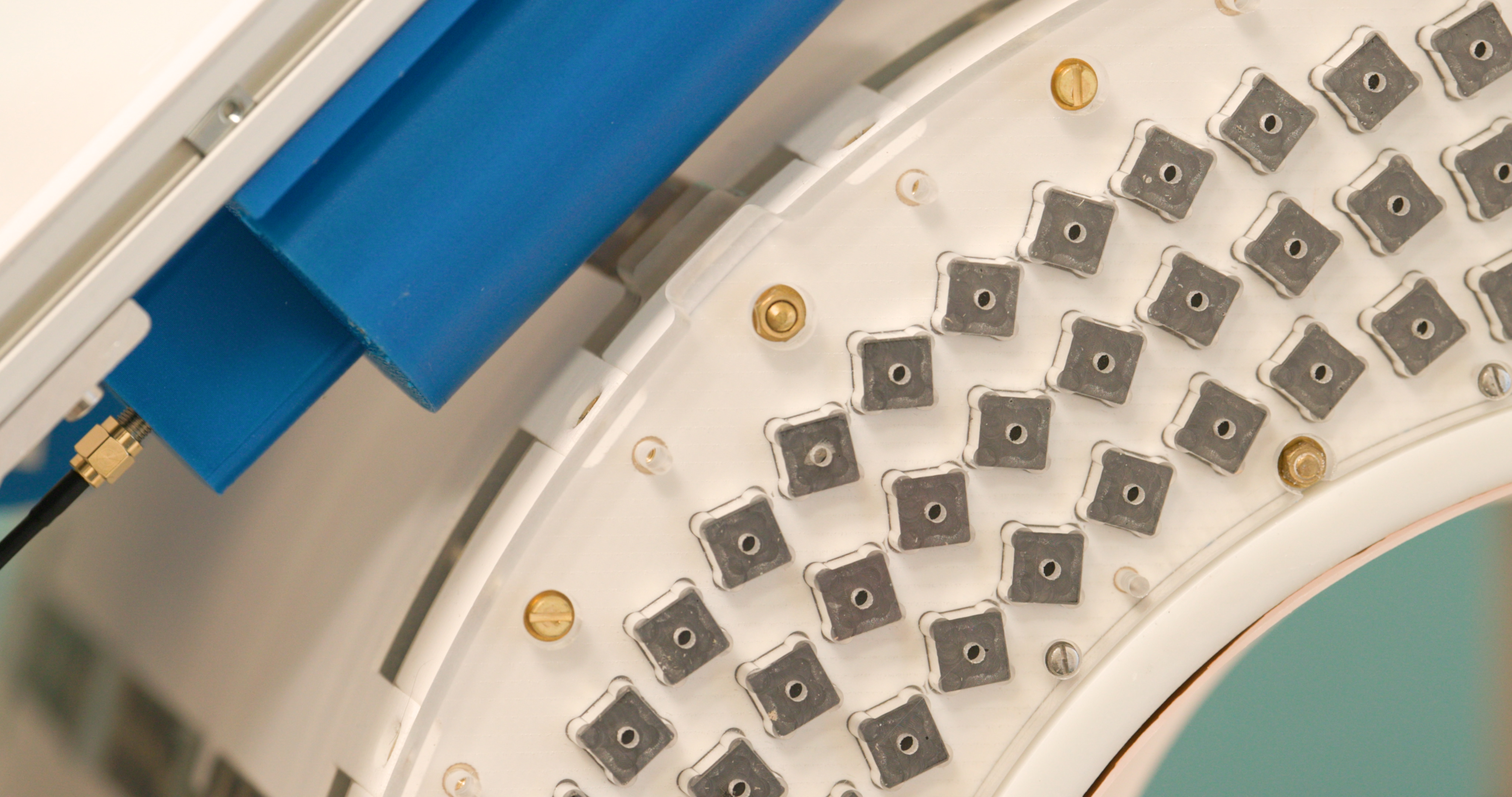
Led by Professor Derek Jones, the project focuses on unlocking research-grade performance from low-field, low-cost scanners through advances in software, physics, signal processing and artificial intelligence. Rather than building new hardware, the team is enhancing the capability of low-field MRI machines by boosting gradient performance, designing imaging sequences tailored to the imperfections of affordable systems, and applying AI-driven ‘image quality transfer’ to recover high-fidelity data from dramatically reduced acquisition.
This approach makes it possible to carry out diffusion MRI research that would normally require a significantly more expensive scanner, while remaining robust to heat, power instability and patient movement, and capable of running from a standard wall socket. The systems are fully open source, repairable and locally maintainable, avoiding long-term dependence on proprietary technology.

“This isn’t about exporting technology. It’s about empowering local teams to lead research that matters to their own communities.”
— Professor Derek Jones
At the heart of the project is a focus on scientific empowerment.
We are enabling researchers in places such as Malawi, Nigeria and South Africa to ask advanced research questions about brain development, dementia, stroke and infectious disease, within their own communities, and on their own terms.
By translating frontier-level diffusion MRI into tools that work in real-world conditions, Cardiff is reshaping who can produce brain research, whose questions are prioritised, and whose brains are studied. In doing so, we are extending the frontiers of neuroscience — and ensuring they are open to all.

Meet the team


Find out more about our research
Get our newsletters from Cardiff University's research, innovation, and enterprise leaders.
Discover more Future Generation Thinking stories
We are a university built on curiosity, compassion, and the conviction that learning and discovery can change lives.


