
Rethinking cancer vaccines for colorectal cancer
Our researchers are developing next-generation colorectal cancer vaccines designed to work for more people.
For decades, cancer immunotherapy has held promise, but success has been limited.
One of the main reasons for this slow progress is that cancer targets are derived from the body’s own proteins, meaning potentially useful immune responses are often weak or completely switched off.
In our labs, Professor Awen Gallimore and Professor Andrew Godkin are aiming to tackle that challenge.
Our researchers are developing next-generation cancer vaccines, helping the immune system recognise and respond to colorectal cancer in order to deliver affordable, accessible and effective treatment for colorectal cancer patients worldwide.
Next-generation cancer vaccines
Our researchers are redesigning cancer immunotherapy, developing next-generation vaccines that harness the immune system while remaining accessible, affordable and globally impactful.
This work is translational, interdisciplinary and discovery-driven. We are integrating immunology with structural biology and clinical science to develop globally relevant cancer vaccines, strengthen immune recognition and accelerate translation to the clinic.
-

Powering immunity
The research focuses on CD4+ helper T cells – immune cells that coordinate powerful, long-lasting anti-cancer responses. -

Rethinking vaccines
This work could lead to vaccines that work for more patients, without the cost of highly personalised treatments. -

From lab to clinic
Insights from the lab are already shaping clinical trials, with the BICCC phase 2 trial currently investigating the effectiveness of cyclophosphamide in reducing colorectal cancer recurrence.

“Our aim is simple – to develop cancer immunotherapies that are effective, affordable and accessible to as many people as possible.”
— Professor Awen Gallimore
We are looking at how immune cells recognise cancer in the first place.
Based within our Systems Immunity Research Institute, this internationally recognised research focuses on CD4+ helper T cells, a vital but under-explored part of the immune response to cancer.
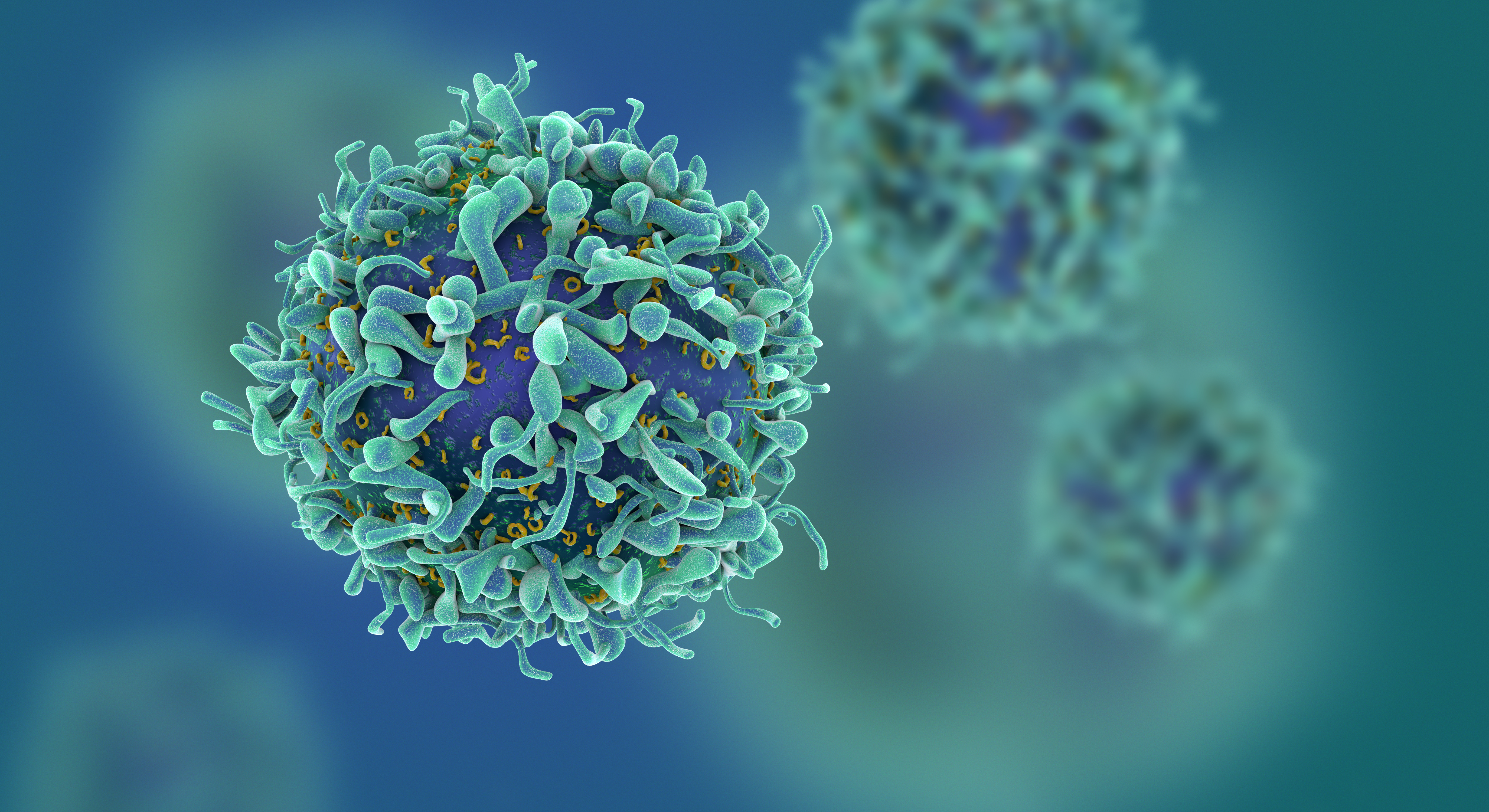
These cells don’t just attack cancer directly; they orchestrate broader immune responses, helping the body recognise, remember and eliminate disease more effectively.
While their importance is increasingly recognised, finding reliable ways to activate them against cancer has remained difficult.
The team’s latest work, supported by a prestigious five-year Cancer Research UK Discovery Programme Award backed by the Bowelbabe Fund, explores how colorectal cancer antigens can be engineered to become inherently more immunogenic.

“By harnessing the full power of CD4+ T cells, we’re opening new possibilities for cancer vaccines that could benefit patients worldwide.”
— Professor Andrew Godkin
By rethinking how the immune system recognises cancer, the research opens new possibilities for treatments that could reach far more people.
Rather than tailoring treatments to individual patients – an approach that can be expensive and slow – this strategy aims to create vaccines that are broadly effective across patient populations.
Working with structural biologist and early career researcher Bruce Maclachlan, this work focuses on proteins found in colorectal cancers that are rarely present in health tissue, making them attractive targets for vaccination.
While presenting fragments of these proteins (peptides) to the immune system can trigger weak immune responses, tailored modifications of these peptide fragments can render them far more immunogenic.
The structure of these complexes is providing valuable insight into the precise molecular interactions that govern how T cells recognise these peptides.
By applying this knowledge to make small modifications to the peptides, the team has been able to substantially strengthen immune responses.


“Structural biology is essential for understanding the precise shapes and molecular interactions important for cancer recognition by immune cells. It will be essential to study these interactions in detail across diverse genetic backgrounds to ensure that we can design vaccines that are more broadly effective and capable of delivering benefit to people worldwide, rather than only to limited patient groups.”
– Dr Bruce Maclachlan
Our future-focused research is already translating into clinical impact.
It’s a shift with profound implications. Colorectal cancer is the third most common cancer worldwide, accounting for approximately 10% of all cancer cases.
By designing vaccines that can be produced at scale, the research opens the door to equitable cancer immunotherapy, reducing barriers to access.
Through placing discovery science at the heart of their research, the team is aiming to develop more effective cancer vaccines and to better understand how the immune system can be harnessed to maximise anti-cancer immune responses.
This work is designed not only to generate new biological insights but to also accelerate their translation into accessible treatments capable of improving outcomes for patients.
Building on earlier trials, the team has shown that repurposing a well-known drug, cyclophosphamide, at low doses can safely ‘kick-start’ anti-cancer T cell responses.
This insight now underpins the BICCC (Brief Intervention with Cyclophosphamide in patients with Colorectal Cancer who Completed treatment) trial.
This is a multicentre trial led from Cardiff, funded by Cancer Research Wales, aiming to recruit 500 patients across the UK.


At Cardiff University, we are shaping the future of cancer care.
We are not only investing in today’s research challenges, but also in the scientific capability technologies and talent that will shape future cancer research.
By integrating immunology, structural biology, data-driven approaches and translational clinical science, we are creating a platform that can continually adapt to emerging discoveries and therapeutic opportunities.
Meet the team



Find out more about our research
Get our newsletters from Cardiff University's research, innovation, and enterprise leaders.
Discover more Future Generation Thinking stories
We are engineering solutions that future generations will depend on. Because the next generation deserves better.


