Growing a healthier nation: LINC event unites research, policy and lived experience to improve children’s health throughout their lifespan
19 December 2025

An event hosted by the Lifespan Multimorbidity Research Collaborative (LINC) brought together researchers, policymakers, public contributors and practitioners to hear the latest findings on the early-life factors that determine life chances and contribute to the development of mental and physical health conditions in later life.
LINC is a research consortium based at the Centre for Neuropsychiatric Genetics and Genomics at Cardiff University dedicated to researching how neurodiversity, adverse childhood experiences and genetic and environmental factors influence the development of multiple co-occurring long-term mental and physical health conditions across our lifespan.
Early life shapes health outcomes across the lifespan
Attendees were welcomed by Professor Jane Lynch and Baroness Anne Longfield in the Hadyn Ellis Building lecture theatre at Cardiff University. Professor Lynch, a LINC co-investigator, highlighted the project’s commitment to generating evidence that improves real-world public services.
Baroness Longfield, former Children’s Commissioner for England and a leading advocate for young people, emphasised the urgency of translating that evidence into joined-up support across the life course. Together, they set a powerful tone for an event focused on shaping fairer, healthier futures.

LINC project Principal Investigator, Professor Marianne van den Bree then introduced a short film setting out the project’s core mission: building a healthier, fairer, and more resilient future, based on the perspective that what happens in childhood shapes outcomes throughout our lives.
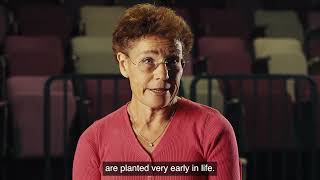
Professor van den Bree also emphasised the tight interconnections between mental and physical health, raising the central question: Why are some individuals at greater risk of developing multiple long-term conditions?

Following this, keynote speaker, Marie Brousseau-Navarro Deputy Commissioner and Director for Health, Office of the Future Generations Commissioner for Wales emphasised the importance of prevention in health policy.

The power of public involvement
The project’s Patient and Public Involvement group has driven LINC’s research at every step. In a moving session, public involvement members Amanda and Samina offered their powerful testimonies on their own experiences of managing multiple long-term conditions and of caring for family members with these experiences.
Reflecting on the ongoing nature of living with complex health needs, Amanda said: “You have to keep learning all the time how to manage your conditions.”
She also praised LINC for their dedication to conducting research to improve the lives of people affected by multiple long-term conditions.
Samina, having supported her mother through living with multiple conditions, spoke through a carer’s lens, stressing the need to recognise and address risk factors early in childhood to prevent increasing health difficulties later in life.

Research-led insights
Attendees then heard a range of research presentations from LINC’s collaborators across the UK.
Risk of multiple long-term conditions start to increase early in life
Dr Ruby Tsang (University of Bristol) discussed the links between depression and risk of cardiometabolic conditions such as high blood pressure and type 2 diabetes. She described different patterns of development of symptoms of depression between childhood and early adulthood. She reported that some of these patterns (characterised by symptoms that continue into adulthood) are associated with greater risk of later cardiometabolic conditions than others.
Links between neurodivergence and multiple long-term conditions
Dr Megan Wood (University of Leeds) explored the relationship between neurodivergence and physical health, noting that: “Neurodivergence shouldn’t mean poorer health, but it often does.” She highlighted the need to study multiple long-term conditions as they emerge in mid-life, rather than waiting until older age. Neurodivergent adults, she noted, are significantly more likely to develop complex health needs earlier, and standard care pathways may not meet their needs.
Importance of protecting children and trauma-informed care
Lauren Benger (Cardiff University) presented findings indicating that people who experience abuse or neglect in childhood more likely to have multiple long-term mental and physical health conditions in middle to older age. She stressed the need to protect children and the importance of taking trauma-related information into account in clinical practice.

Links between genetic factors and multiple health conditions
Dr Ioanna Katzourou (Cardiff University) presented findings showing that genetic factors play a role in the likelihood that people experience multiple long-term physical and mental conditions at some point in their lives. This includes certain genetic conditions that are likely to lead to learning difficulties and neurodiversity as well as anxiety and depression. Her work demonstrates the importance of integrating genetic data with life course, environmental, and social factors to best inform people and support them reducing their risk.
Dr Nabila Ali (Cardiff University) elaborated on these genetic conditions, explaining that affected children often struggle to keep up in school. A diagnosis by a genetics clinic of these conditions would present an important opportunity to support these children early and reduce their risk of experiencing complex mental and physical health conditions during their lives. Unfortunately, many children currently do not receive such a diagnosis in early life nor the support in school and with their mental health that could help them. Better access to support for these families can have long-lasting positive outcomes.
The risk of multiple health conditions in Asian populations
Dr Daniel Stow (Queen Mary University of London) spotlighted a critical gap in existing research: the under-representation of South Asian populations in studies of multiple long-term conditions.
Drawing on data following the health of British Bangladeshi and British Pakistani volunteers over a 10-year period Dr Stow reported a vulnerability for developing multiple long-term mental and physical conditions, with diagnoses starting to emerge from early aduldhood onwards. He revealed notable patterns associated with gender, ethnicity (Bangladeshi vs. Pakistani), socio-economic situation and genetic risk and suggested that screening and intervention approaches before age 40 could contribute to more equitable healthcare delivery.

Closing discussions
After a lively debate around about how these findings can contribute towards reducing multiple long-term mental and physical health conditions in society, Professor Marianne van den Bree and Professor Mark Mon-Williams closed the event thanking everyone for their powerful contributions throughout the day.
What Next?
Call to Action: Growing a Healthier Nation Together
The LINC project has shown that childhood shapes health across the lifespan. The evidence is clear: prevention, early intervention, and inclusive research are essential if we are to reduce the burden of multiple long-term conditions and build fairer, healthier futures.
Now is the time to act:
- Researchers – deepen collaboration across disciplines and ensure diverse communities are represented in studies.
- Policymakers – translate evidence into joined-up, trauma-informed, and equitable health and social care policies.
- Educators - listen to the voices of children and their families to create an inclusive education system
- Practitioners – embed prevention and early support into everyday practice, recognising the tight links between mental and physical health.
- Organisations – prioritise children’s health and lifelong wellbeing.
Together, we can turn knowledge into action. Let’s commit to building a healthier, fairer, and more resilient nation, for the future of all children and young people. Follow our Child of the North campaign to see the latest evidence, examples of great practice and recommendations for building a country that works for all children and young people:
Look out for more information on the follow-up meeting on Monday 23 February 2026, where LINC's latest findings will be showcased, to continue shaping this vital conversation.