Environmental Sustainability Plan 2025-2035
- Last updated:
- Download this document (PDF, 10.7 MB)
Sustainable Futures: Transformation through Collective Agency
Introduction
Our planet faces significant environmental challenges. The climate emergency, loss of biodiversity, and scarcity of essential resources are pressing issues of our time, requiring immediate and transformative responses. Collectively, we must significantly scale up climate action as the impacts of climate change intensify, and the window of opportunity to avert catastrophic climate change is closing rapidly. Successful climate action at scale requires an integrated whole-systems approach that reconciles the interdependence of environmental, economic, and social considerations to maximise positive impacts and co-benefits.
As a leading institution of higher learning, we are responsible for shaping a sustainable future for ourselves and society through education, research, engagement, and operational excellence. Sustainability and technological transformation lie at the very heart of our institutional strategy, Our Future, Together. This strategic vision guides our collective journey, reaffirming environmental sustainability as a core principle that is integrated into all aspects of our institutional life.
At a research-intensive university, we are a community of leading experts in climate science, energy systems, sustainable behaviour and consumption, environmental justice, peace, equality, and sustainable technologies. Additionally, our large and diverse student body provides an exceptional opportunity to embed sustainability skills, shaping future leaders who are equipped and motivated to drive sustainability in their future careers and communities.
Our environmental sustainability strategy, Sustainable Futures, is founded on shared responsibility and systemic understanding, recognising the interconnectedness of environmental, economic, and institutional systems that influence and are influenced by our actions. It mobilises our collective intellectual and innovative capacity, empowering all members of our university community to participate in our sustainability efforts. By combining technological innovation with inclusive and collaborative action, we develop solutions that are both technically sound and socially responsible, capable of fostering sustained and systemic change. The strategy is an institutional commitment, a catalyst for individual and collective action, and a platform that emphasises well-defined implementation pathways, transparent reporting, and community involvement—extending our leadership and impact to inspire transformative regional, national, and global change.
Our context
Our Sustainable Futures is grounded in distinct Welsh legislative and policy contexts and is especially shaped by the Well-being of Future Generations (Wales) Act 2015. This pioneering framework requires us to act sustainably for both current and future generations, aligning our strategic goals with the Act’s seven well-being goals and operationalising its five ways of working.
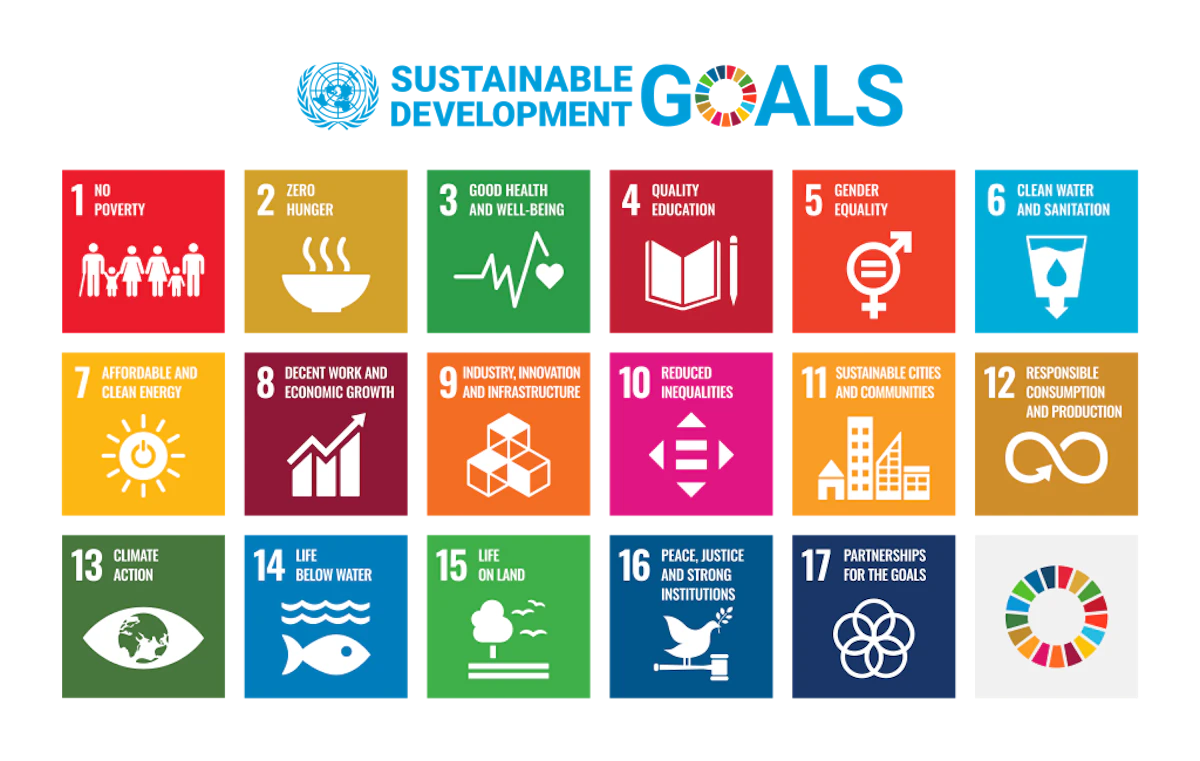
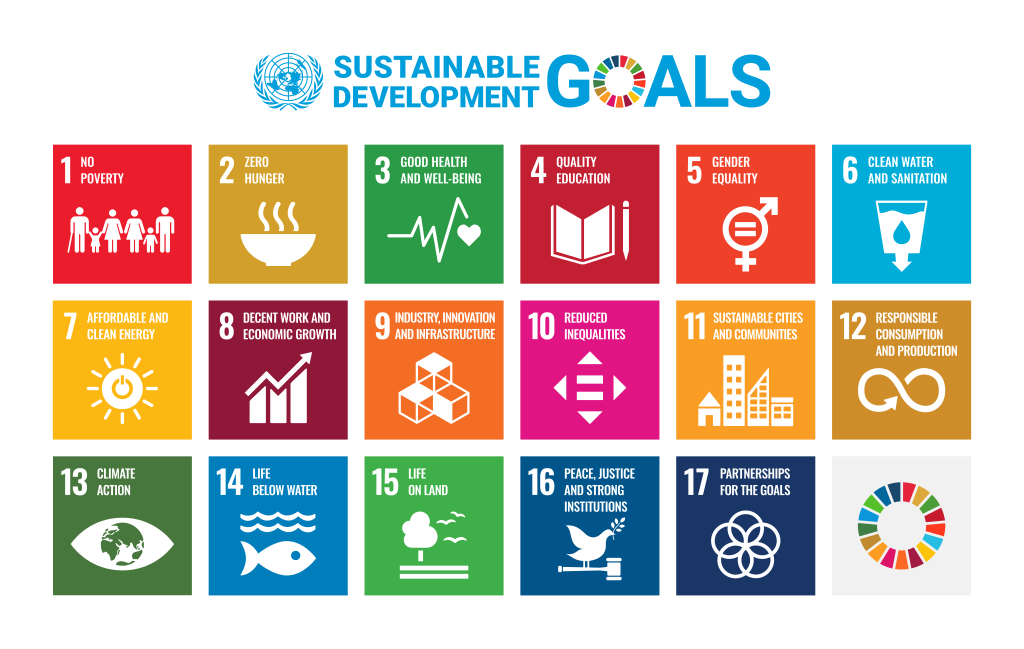
We are committed to the United Nations Sustainable Development Goals (SDGs), and we share their universal call to action to protect the planet, end poverty, and ensure peace and prosperity for all. Nationally, we also respond to the UK Government’s commitment to achieving net-zero emissions, as well as the evolving guidelines from Medr (Commission for Tertiary Education and Research), which shape sector-specific expectations within Welsh tertiary education.
Additionally, our stakeholders, such as UK Research and Innovation (UKRI), are increasingly emphasising the role of environmental sustainability within research funding and innovation frameworks. Students expect meaningful climate action, and employers seek graduates equipped with sustainability skills to drive their organisations forward. As part of our commitment to corporate social responsibility, we must align our Environmental, Social, and Governance (ESG) goals with wider societal expectations, embedding environmental accountability and transparency into our institutional fabric.
Collectively, these external and internal drivers ensure our strategic commitments are aligned with both national and international sustainability priorities. By placing sustainability within our broader institutional strategy, Our Future, Together, we reaffirm our ambition to become a zero-carbon, nature-positive university. This approach empowers our community, fostering collective ownership and driving forward sustainable techno-behavioural innovations that will benefit both our university and wider society.
Our goals
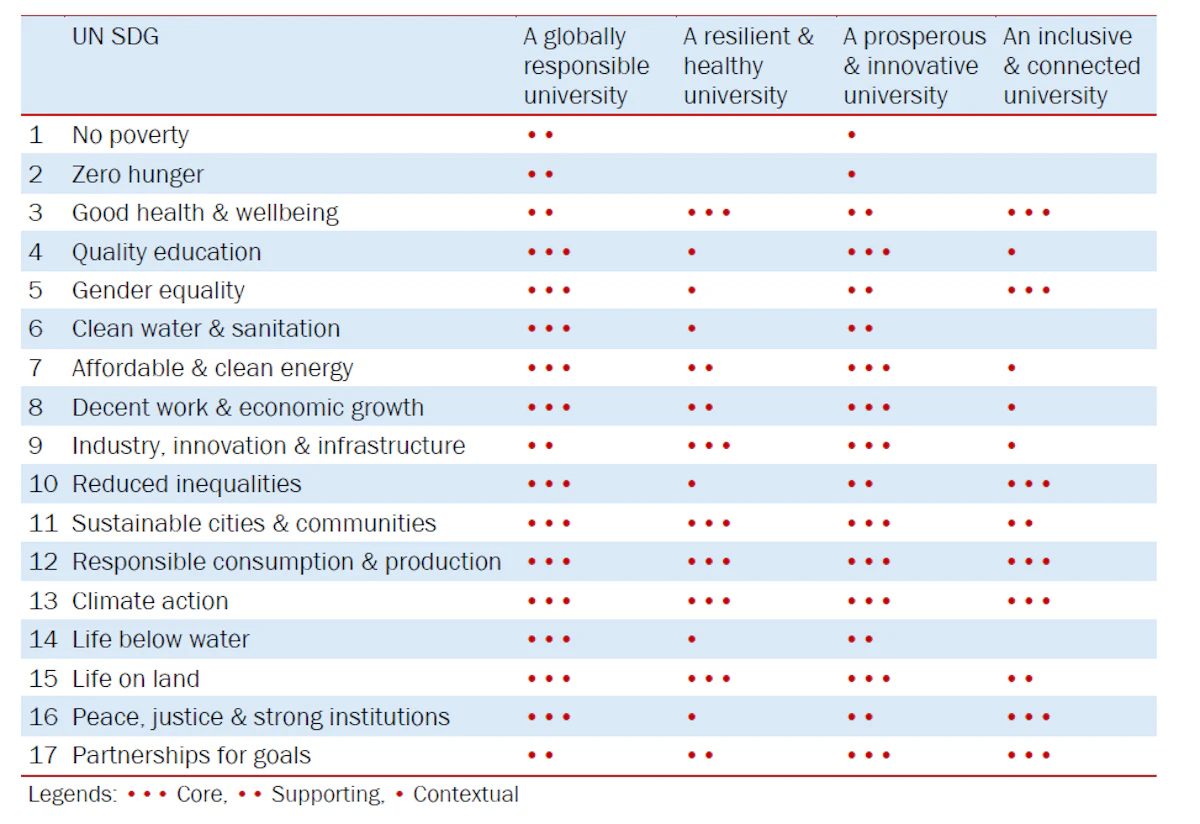
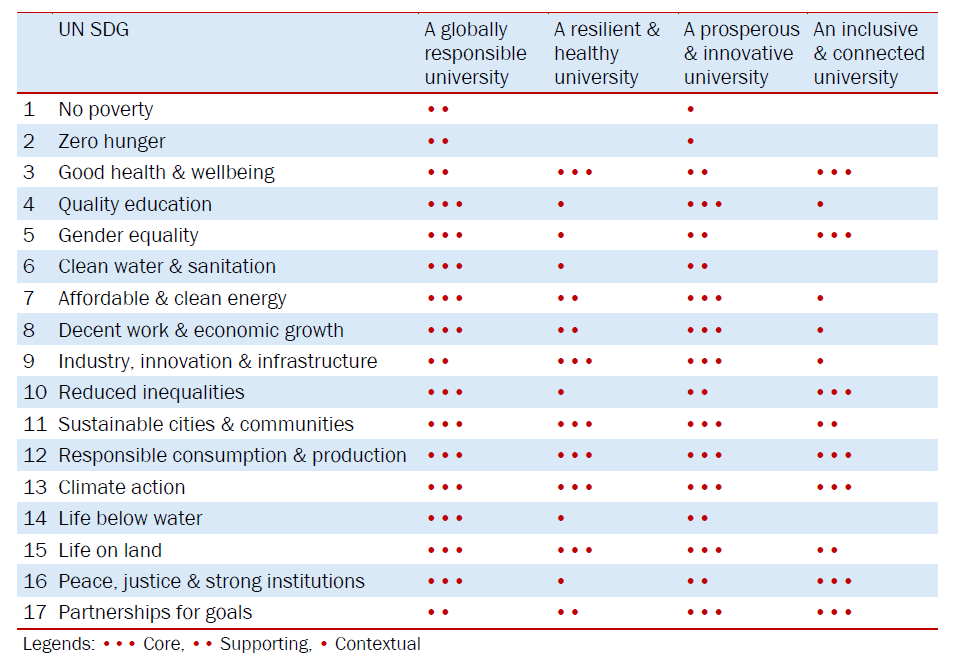
Our goals: We are committed to achieving carbon net-zero (Scope 1 and 2) and progressing towards net-zero greenhouse gas emissions, while delivering nature-positive outcomes and enhancing social, economic, health, and well-being impacts across our activities. Our four sustainability goals are based on the vision outlined in our institutional strategy, Our Future, Together, and reflect its three strategic priorities: culture, cynefin and community; a vibrant and thriving place; and co-creating futures. Our goals also align with the Well-being of Future Generations (Wales) Act 2015 and the United Nations Sustainable Development Goals (SDGs).
We will:
- act as a globally responsible university
- build a resilient and healthy university
- drive a prosperous and innovative university
- foster an inclusive and connected university community
A globally responsible university aligns with co-creating futures by minimising the environmental impact of our activities, promoting responsible consumption, and extending our positive influence through education, research, partnerships, and governance. This goal contributes to a globally responsible Wales.
A resilient and healthy university advances co-creating futures by integrating climate adaptation, nature-based solutions, and resilience thinking into our estates and decision-making, enhancing institutional resilience and well-being, while supporting the goals of a resilient Wales and a healthier Wales.
A prosperous and innovative university supports co-creating futures and a prosperous Wales by leveraging our data and campus as a hub for innovation, facilitating sustainability-focused work experience, and through cross-sector partnerships for innovation and inclusive growth.
An inclusive and connected university reinforces our priorities of culture, cynefin, and community and a vibrant and thriving place. It contributes to a Wales of vibrant culture and Welsh language, a more equal Wales, and a Wales of cohesive communities by empowering us with knowledge and skills to take sustainability action in everyday practice. It fosters a shared purpose and promotes equitable participation.
| Our Future, Together priorities | Sustainable Futures goals | Well-being of Future Generations (Wales) Act goals |
|---|---|---|
| Co-creating futures | A globally responsible university | A globally responsible Wales |
| A resilient and healthy university | A resilient Wales | |
| A prosperous and innovative university | A healthier Wales | |
| A prosperous Wales | ||
| A vibrant and thriving place | An inclusive and connected university community | A Wales of vibrant culture and Welsh language |
| Culture, cynefinand community | A more equal Wales | |
| A Wales of cohesive communities |
Goal 1: A Globally Responsible University
We aim to minimise the environmental footprint of all our activities, to help develop solutions that enable others to do the same, and to lead by example in sustainability. We'll extend our positive influence locally and globally through education, research, partnerships, and transparent governance.
We'll achieve this by:
- Progressively reducing our Scope 1 and 2 emissions, and working closely with our stakeholders to minimise Scope 3 emissions, supporting our ambition to become a net-zero university.
- Championing sustainability through education by equipping all students with the knowledge, skills, and values aligned with the United Nations Educational, Scientific and Cultural Organisation (UNESCO) cross-cutting SDG learning objectives—including systems thinking, anticipatory, normative, strategic, and collaboration competencies—embedded across curricula and enriched through real-world experiences.
- Promoting responsible consumption by reducing demand for resources and services and minimising waste generation through prevention, reuse, recycling, and circular economy principles.
- Improving our understanding of the environmental impacts of research and building awareness among researchers and technicians to minimise these impacts through responsible and sustainable research practices.
- Demonstrating environmental leadership through transparent Environmental, Social, and Governance (ESG) monitoring, reporting, and benchmarking against global standards and frameworks, ensuring continuous improvement and inspiring wider transformative change.
Goal 2: A Resilient and Healthy University
We'll enhance Cardiff University’s ability to anticipate, withstand, and adapt to environmental and climatic risks, ensuring the integrity and continuity of our operations, research, and educational missions. Embedding resilience entails preparing our estate and infrastructure for emerging challenges, such as the impacts of climate change, while also supporting our community's health and well-being through sustainable practices and nature-based solutions.
We'll do this by:
- Improving our understanding of emerging environmental risks and the interdependencies between adaptation and mitigation measures to inform strategic planning and development.
- Enhancing biodiversity, increasing green infrastructure, and adopting nature-based solutions that provide climate regulation and ecosystem services.
- Designing robust, evidence-based pathways to achieving net-zero emissions that combine technical innovation with practical, cost-optimal actions, while recognising that mitigation measures must not undermine our capacity to adapt to climate impacts such as increasing temperatures.
- Developing tools, methods, and processes for embedding environmental resilience in decision-making.
- Ensuring that buildings and public spaces foster physical and mental well-being for the university community.
- Facilitating healthier and more sustainable choices by offering active and low-emission travel options and low-environmental-impact food choices.
- Developing and implementing awareness campaigns and sustainable behaviour programmes to foster individual and collective responsibility for resilience and sustainability.
- Measuring and monitoring essential environmental resilience and well-being indicators to assess progress and enhance our responses over time.
Goal 3: A Prosperous and Innovative University
We view sustainability as a catalyst for innovation, inclusive economic growth, and social impact. By transforming the university into a living laboratory and leveraging our innovation ecosystem and world-leading expertise in sustainability, we'll co-create solutions to accelerate the transition to a net-zero, circular economy.
We'll do this by:
- Widening access to operational data (e.g. energy use, waste, buildings) for evidence-based decision-making at all levels and to support teaching and research that drive innovation.
- Facilitating sustainability-focused work experience, internships, and placements, enabling students to apply their knowledge in practice and develop the critical thinking, self-awareness, and integrated problem-solving skills essential for sustainability-led employment, preparing them to be agents of positive environmental change.
- Expanding our living labs within a dedicated Sustainability Innovation Hub, providing a collaborative space where data, tools, methods, and pilot projects are brought together to test, evaluate, and scale interventions across all sustainability domains—from estates and infrastructure to mobility, procurement, and resource use.
- Mobilising our cross-disciplinary expertise through a Sustainability Academic Forum, which will advise on our sustainability journey, support the embedding of sustainability across teaching, promote the integration of sustainability considerations into research activities, and act as a resource for external stakeholders in their sustainability journey.
- Cultivating partnerships with industry, government, and communities to maximise the economic and social impact of our sustainability research and innovation.
- Supporting students and staff in pursuing entrepreneurial initiatives that address pressing environmental challenges and contribute to growth.
Goal 4: An Inclusive and Connected University
We acknowledge the value of an inclusive, informed, and actively engaged community in promoting sustainability. By making sustainability a core value across all aspects of university life, we aim to promote collective ownership, enhance social cohesion, and empower every member of our community to contribute to our shared goals.
We'll do this by:
- Integrating sustainability knowledge and skills into staff training and leadership development, and promoting inclusive access to learning and dialogue across the university community, raising awareness of the interconnectedness between sustainability domains and empowering all to engage with sustainability in their context.
- Developing a strong sense of shared purpose, making sure sustainability is at the heart of our identity and that everyone feels empowered to contribute to and benefit from our sustainability efforts.
- Empowering individuals and groups to take collective, data-informed action by expanding access to shared data, tools, and insights through a ‘sustainability commons’, alongside opportunities for participation and shared decision-making at all levels.
- Ensuring that climate action planning and implementation processes are inclusive and reflect the diversity of our community, fostering equitable participation and representation.
- Establishing transparent processes for collecting community feedback and using this input to refine and evolve our sustainability efforts.
- Nurturing networks and communities of practice that facilitate knowledge sharing, celebrate success, and inspire further engagement and innovation.
Collective Agency and Cynefin
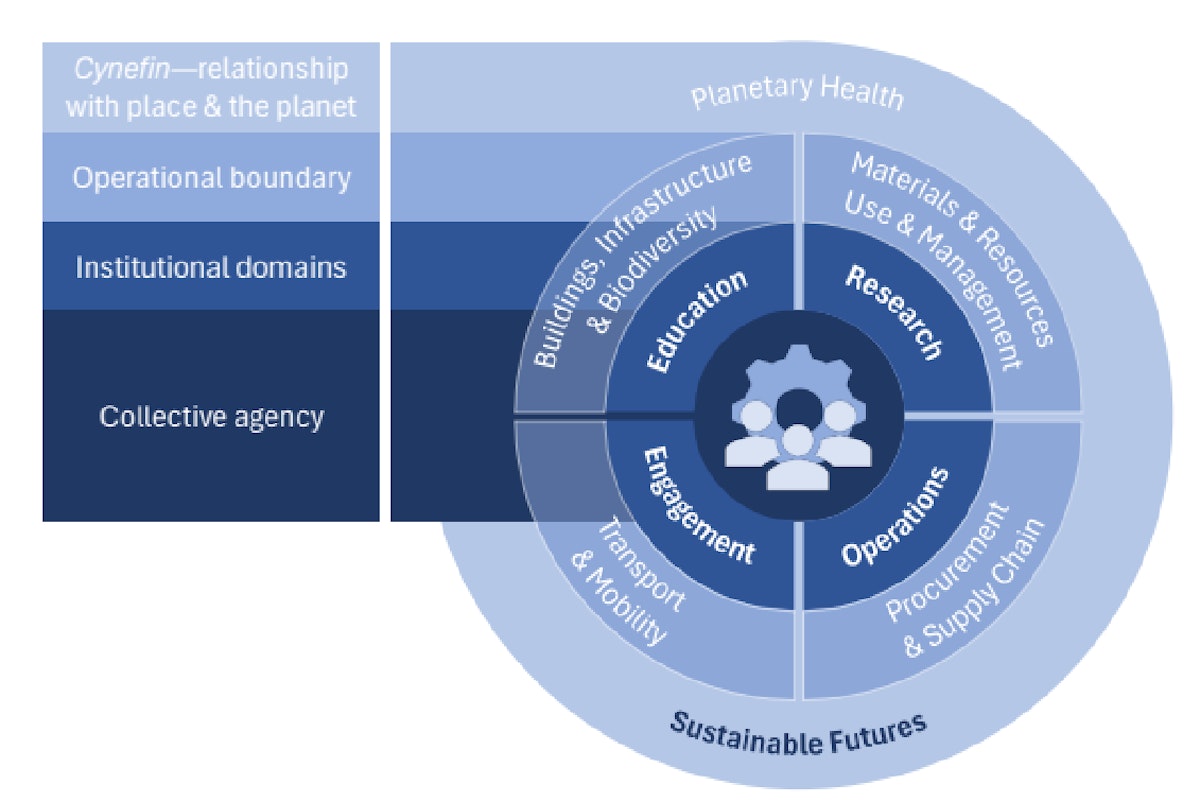
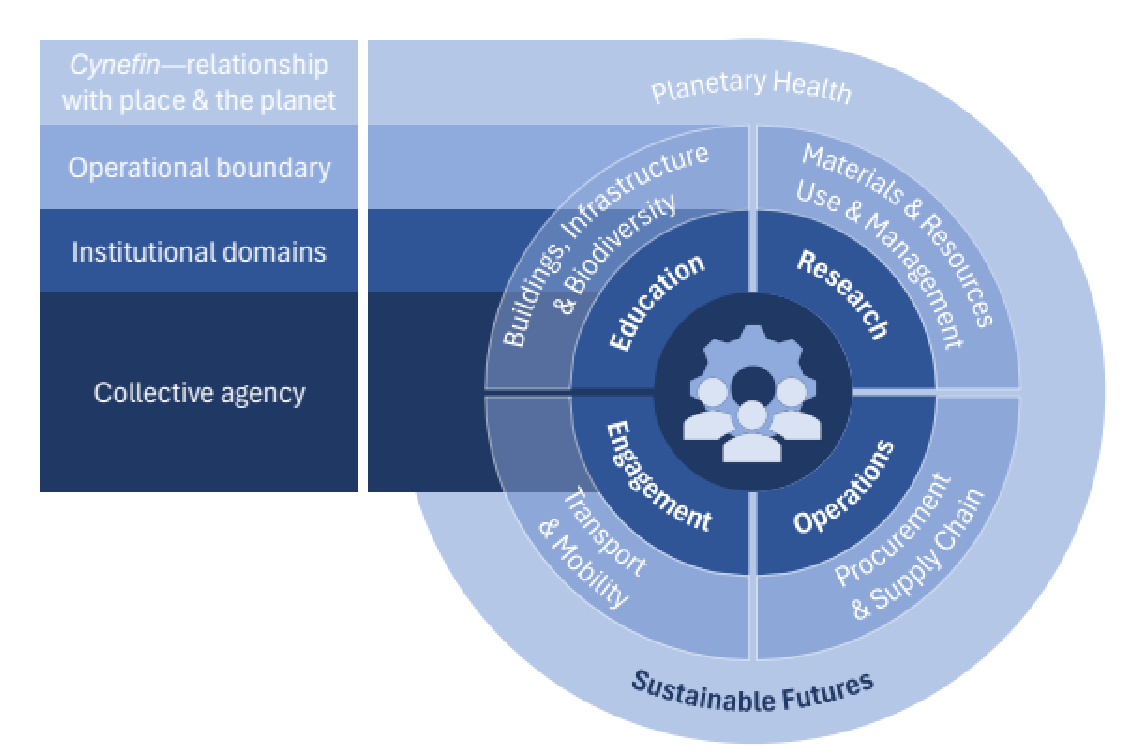
As we intensify our sustainability and climate efforts, we acknowledge that meaningful progress requires the effective integration of people, technology, and institutional processes into a cohesive and adaptive force for change. Inspired by cynefin, a core institutional priority within Our Future, Together, which emphasises connection, context, and community, we view sustainability as both a socio-technological and socio-environmental endeavour and a shared pursuit.
Technology alone won't be enough to achieve ambitious sustainability goals, such as net-zero emissions. Shifting from fossil fuels to renewable sources without addressing our growing energy demand will, at best, postpone achieving net zero, and at worst, hinder our efforts to reach it. The demand for resources with an environmental impact stems from us—the university community, including its staff and students—through our everyday activities. Sustainable Futures places us as actors of change within the broader systems of sustainability, recognising that transformation depends on our collective agency.
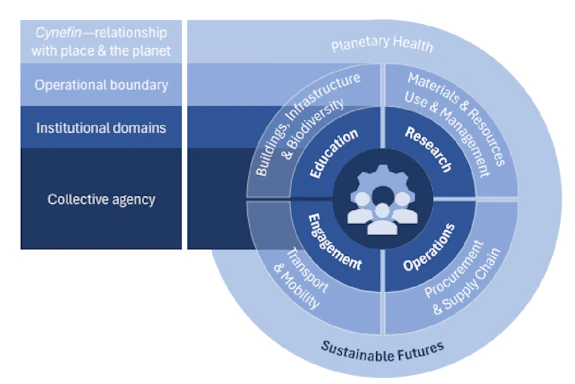
Our collective behaviours and interactions across key interconnected domains within our operational boundary—buildings, infrastructure, and biodiversity; transport and mobility; materials and resources use and management; and procurement and supply chain—shape environmental, economic, social, and health outcomes. In turn, these domains, together with institutional processes and policies, influence individual and organisational behaviour, enabling or constraining sustainable choices within a dynamic system.
Our strategy aims to ensure that all members of the university community have equitable opportunities to contribute to and benefit from our sustainability journey. We acknowledge that a one-size-fits-all approach may not reflect the diverse capacities, roles, and lived experiences across the institution. We are committed to developing inclusive action plans, policies, and guidelines that recognise and support this diversity. By actively promoting cynefin—our shared relationship with place and the planet—we aim to unlock our full collective potential and secure a sustainable future for all.
Foundational enablers
The scale of ambition required to achieve net-zero and nature-positive outcomes requires an enabling environment that facilitates the translation of our intent into effective, sustained action. As an action-oriented framework, our strategy is guided by three foundational enablers—empowerment, agency, and adaptability—emphasising that people must be enabled to act with the right conditions in place to turn awareness into meaningful change.
Integrating these enablers addresses a key shortcoming of conventional climate strategies in similar settings, which rely heavily on technical solutions, compliance, and top-down target-setting, without sufficiently addressing the social and behavioural dimensions that ultimately determine whether these targets are achieved. This techno-centric approach can overlook the critical role of people as change agents embedded within wider sustainability systems—their awareness, motivation, capacity to act, and ability to adapt as the sustainability landscape evolves.
Empowerment provides the university community with the means to act, ensuring equitable access to knowledge, data, tools, insights, and skills needed to translate ambitions into practical actions. An open data and knowledge environment enables people to apply what they know more effectively and better understand the interrelationships and opportunities to shape their actions and our collective sustainability journey.
Agency is the capacity and willingness to make choices and take purposeful action—individually or through co-creating and delivering solutions together—supported by enabling processes that remove barriers. When the university community feels empowered and connected to sustainability goals, it acts with intent and overcomes the inertia that top-down approaches often create or reinforce.
Adaptability keeps our climate action relevant and resilient in the face of uncertainty and change. Sustainability challenges are dynamic and shaped by emerging risks, new evidence, and shifting societal expectations. Embedding adaptability enables us to continuously learn, adjust, and improve our approaches rather than being constrained by static plans.
Decision-making for sustainability
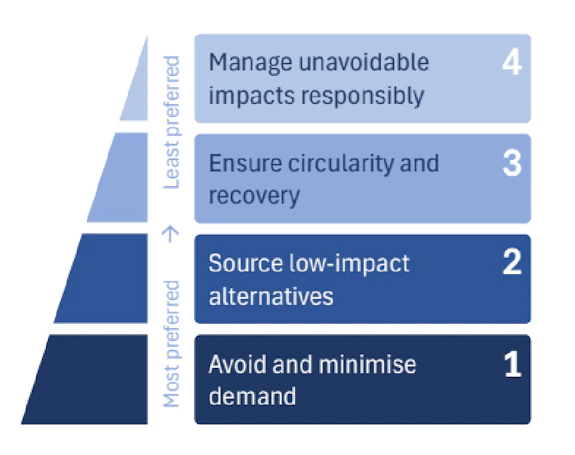
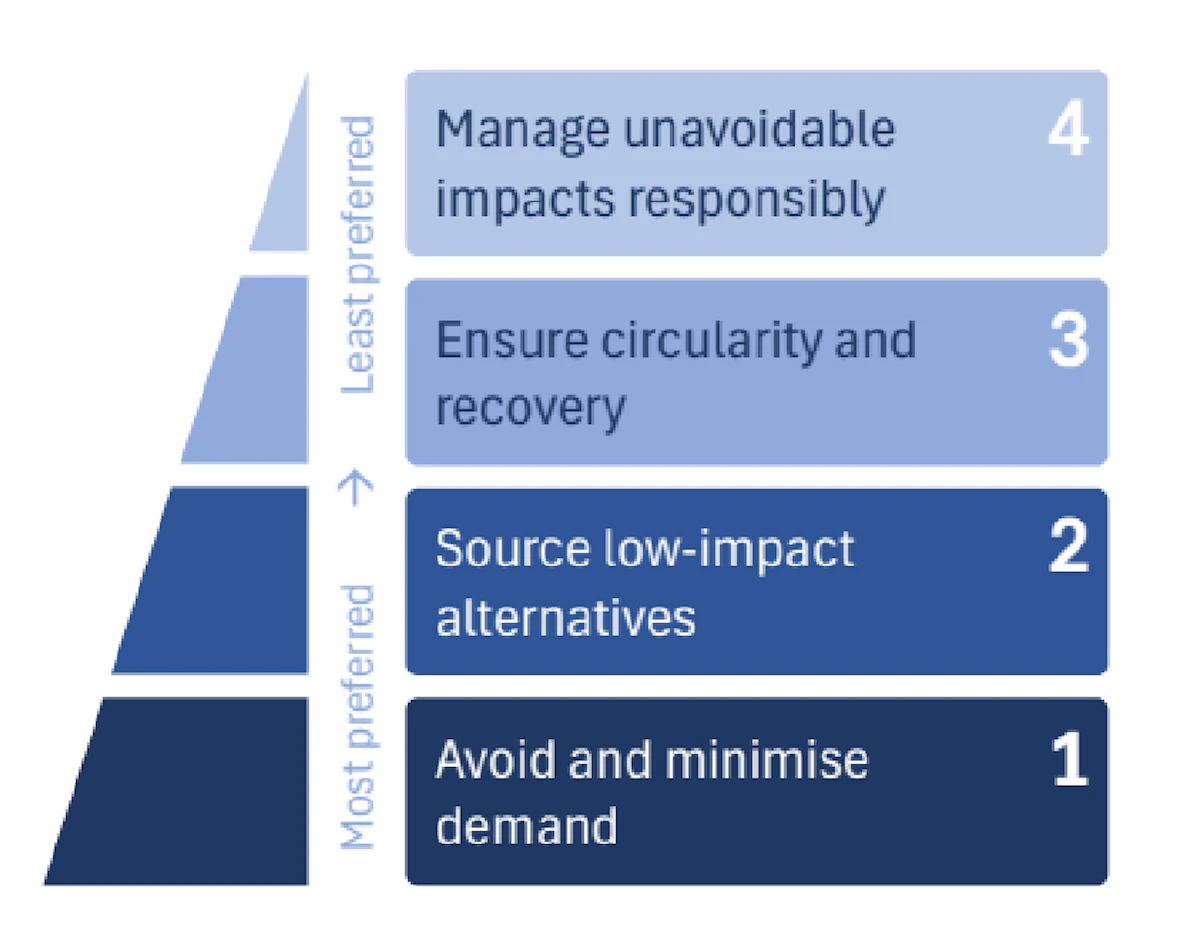
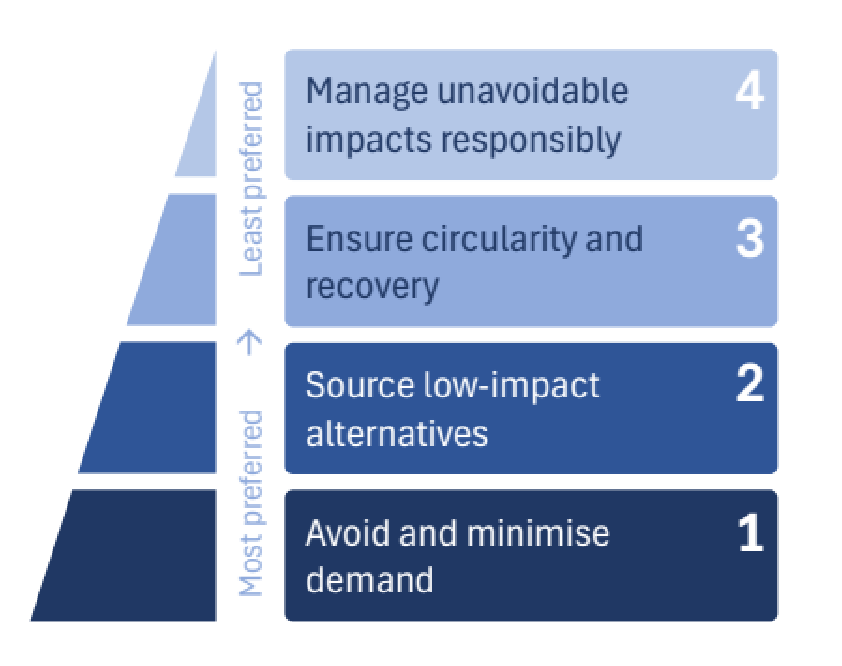
Most human activities have a negative environmental impact, which makes the aspiration of achieving ‘zero environmental impact’ inherently challenging. In theory, one could avoid impact altogether by choosing not to undertake an activity, but this is rarely realistic in practice. A more responsible approach is to recognise the impact and minimise it as far as possible. Reducing demand for resources and services from the outset is, therefore, the preferred and effective first option. Every decision, from individual travel and small purchases to significant capital investments in new facilities, must integrate the Demand First principle, which advocates for the following logical sequence of demand reduction and responsible management steps:
Avoid and minimise demand
The most effective climate action is to avoid demand altogether by asking whether a resource or service is essential and if we can manage without it. Where use is justified, the focus should be on reducing the required amount through efficiency measures, sharing, improved planning, and behavioural change. This step addresses impacts at their source and prevents them from arising.
Source low-impact alternatives
When resource use cannot be avoided entirely, the next priority is to select options with the lowest possible environmental impact. This includes selecting renewable, recycled, or sustainably sourced materials, engaging suppliers with robust environmental credentials, and prioritising low-carbon technologies and processes.
Ensure circularity and recovery
Decisions should ensure that procured materials, products, and infrastructure are specified and managed so they can be repaired, reused, refurbished, or recycled at the end of their useful life. Embedding circular design principles minimises waste, conserves resources, and extends value.
Manage unavoidable impacts responsibly
Where impacts cannot be eliminated or fully mitigated, the remaining residual impacts must be managed transparently and justified robustly as necessitating further action beyond direct mitigation. Local-only, preferably like-for-like, offsetting may be used as a final measure, concentrating on credible, high-quality projects that directly support local biodiversity, habitat restoration, or community-based climate initiatives, in line with our commitment to genuine sustainability leadership.
A framework for resilience and leadership
Each organisation's sustainability journey is unique, shaped by its context, constraints, opportunities, and goals. Our sustainability goals are ambitious, going beyond what is required to meet external targets or directives at any given time. Achieving them, therefore, requires moving beyond compliance and embedding sustainability into everyday practice through an action-oriented, evidence-led approach grounded in our organisational context and responsive to change.
Sustainable Futures draws on our unique Welsh context and builds on our foundational enablers – empowerment, agency, and adaptability – together with the Demand First approach, to provide a practical framework for resilience and leadership. For sustainability and climate action to become ubiquitous in the organisational fabric, impacts, options, and performance metrics must be visible and actionable at every level. Data, information, and knowledge are therefore central – they must be accessible to all, enabling us to discover evidence, develop contextual insights, and make informed decisions. Actions must be grounded in robust evidence, drawn from data and enhanced through engagement with people and processes. By ensuring that decisions are informed, adaptable to emerging risks and aligned to maximise co-benefits, we strengthen our leadership in sustainability and ensure that climate action becomes part of our everyday way of working.
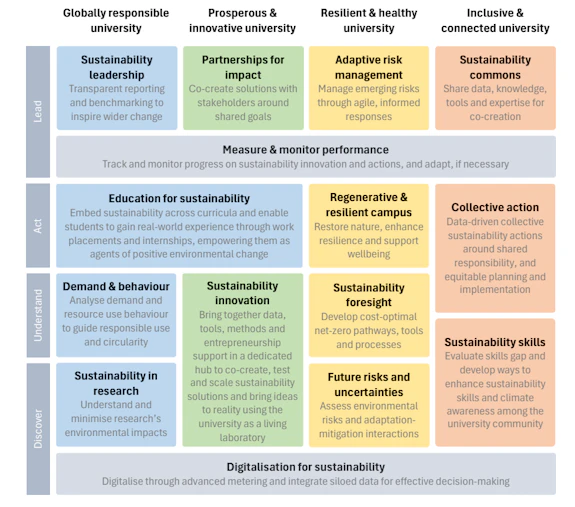
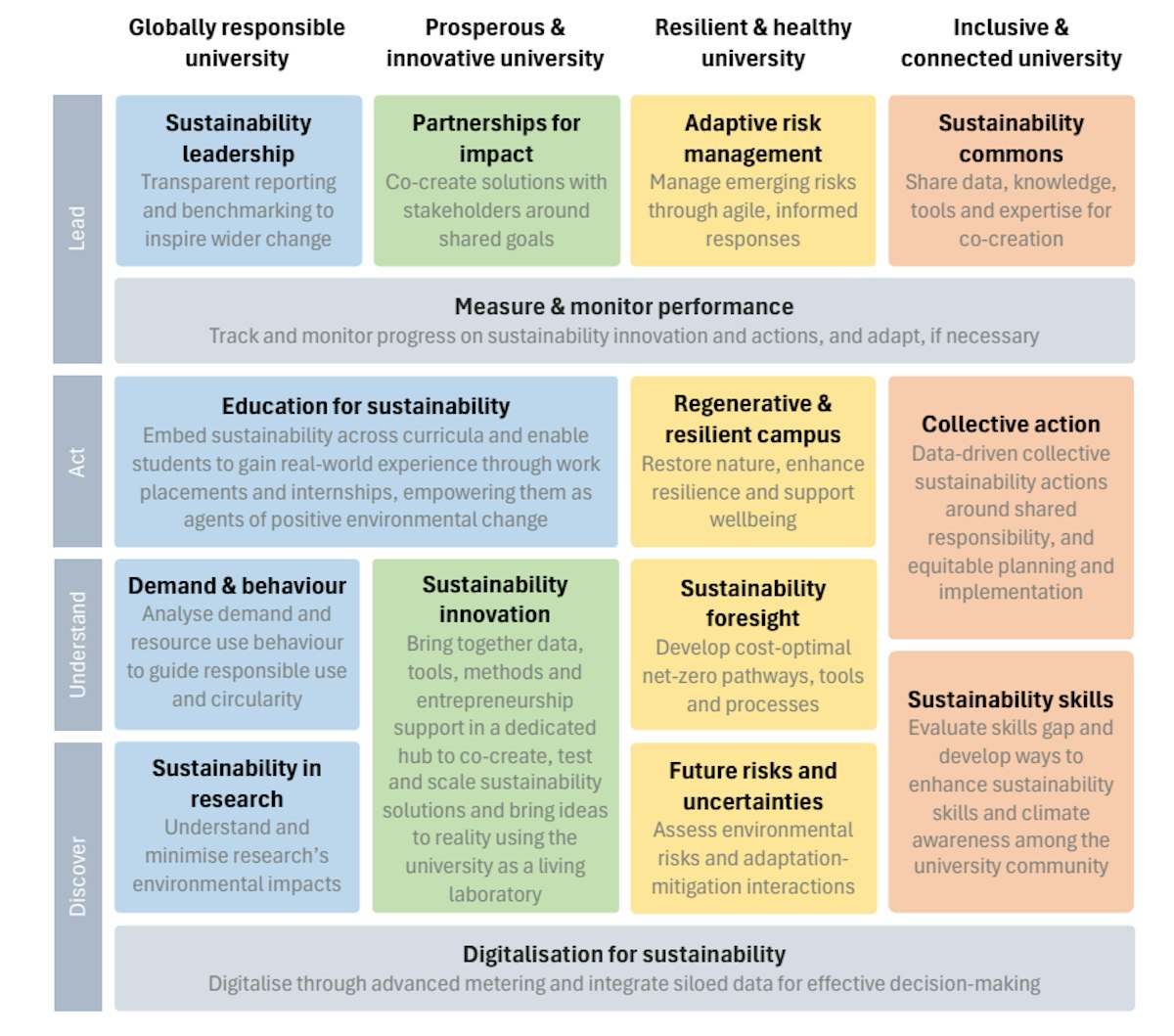
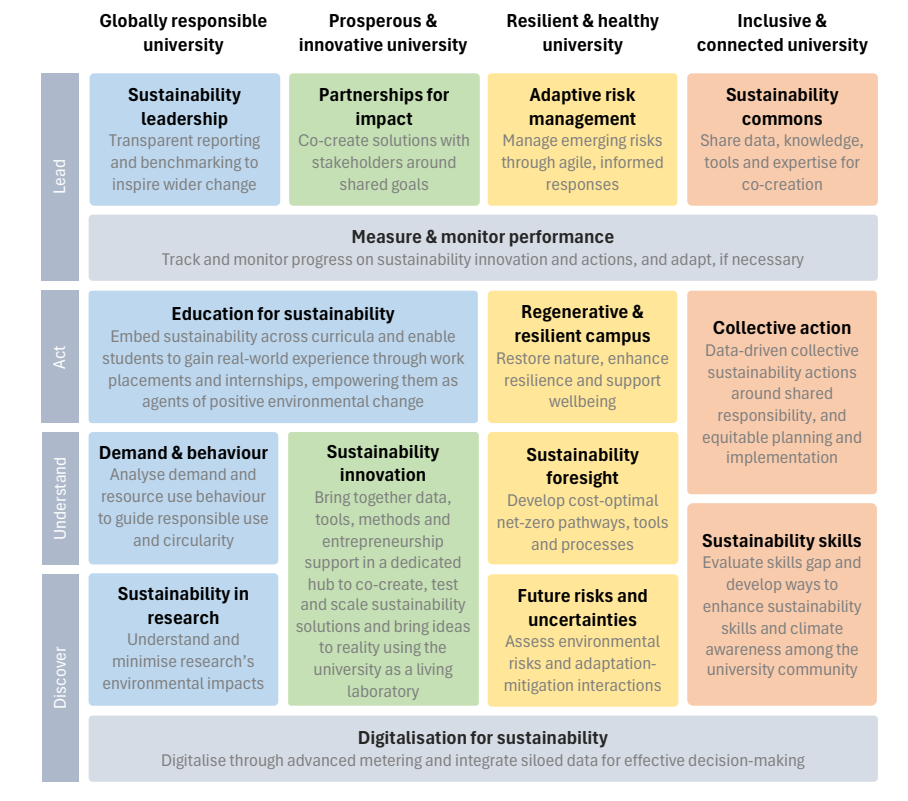
The Sustainable Futures framework follows four interconnected and iterative stages:
- Discover: Build and maintain an evidence base by gathering and connecting data, and improving our understanding of impacts, resource flows, behaviours, and system interactions across all sustainability domains and university activities.
- Understand: Translate evidence into actionable insights by examining patterns and risks, defining priorities, understanding domain-specific impacts, and identifying opportunities for responsible consumption, circularity, and resilience.
- Act: Apply insights through targeted, cost-optimal actions that deliver measurable progress, with demand reduction as the first step. Actions cover all areas – from operations and work-integrated education to sustainability research, innovation, and broader engagement – while identifying co-benefits and synergies wherever possible.
- Lead: Demonstrate sustainability leadership through transparent monitoring, reporting, benchmarking, effective governance, and active engagement. We aim to strengthen our reputation as a sustainability leader by sharing progress and expertise and collaborating with others to accelerate the transition to a sustainable future.
Operationalising the strategy
In line with Our Future, Together, the implementation of Sustainable Futures reflects our institutional approaches of delivering efficiently, working collaboratively, empowering staff and students, and being ambitious. These approaches guide how we design our initiatives, implement actions, and evaluate impact. Sustainable Futures will be delivered through a distributed operational structure, annual action planning, and transparent reporting, ensuring our sustainability journey is driven by a culture of continuous improvement and shared purpose.
Distributed operational structure
A central tenet of this strategy is that sustainability action is shared across the whole University community. Over the lifetime of Sustainable Futures, we will move progressively towards a distributed operational model, devolving local strategy and planning to colleges and Professional Services, and ultimately to individual schools and departments. Each unit will develop its sustainability action plan, ensuring collective ownership of our goals. Colleges and Professional Services will establish Sustainability Implementation Groups to translate shared goals into locally relevant actions, track progress, and embed sustainability within their activities.
The central Sustainability Team will provide expertise and tools to support this transition. Specialist working groups focused on Environmental Management and Engagement, as well as Materials and Resources, will coordinate operational sustainability activities and lead thematic improvements, adhering to principles of resilience and the circular economy, as well as best-practice environmental management.
The Sustainability Academic Forum, comprising leading academics whose expertise aligns with the UN SDGs, will advance our work in education, research and engagement related to the SDGs and advise on strategic and operational sustainability matters.
The Sustainability Foresight Working Group will guide the development of science-based pathways, tools, and methods for achieving net-zero emissions and enhanced resilience, ensuring we remain agile in responding to emerging challenges. The required expertise will be drawn from the Sustainability Academic Forum.
People for Sustainability Networks (PSN), including Students for Sustainability (S4S) and Environmental and Community Officer (ECO) networks, will underpin the governance structure by connecting the university community. PSN will be action-focused and promote equitable participation for the co-creation of solutions and behaviour change initiatives at the grassroots level. PSN members will also contribute to working and steering groups to ensure broad representation and local insight for inclusive decision-making.
Environmental Sustainability Action Plan (ESAP)
Sustainable Futures outlines our vision and objectives, while the Environmental Sustainability Action Plan (ESAP) specifies the actions and targets for each year. The ESAP delineates commitments, performance indicators, and defined responsibilities. It is reviewed and updated annually to remain responsive to new evidence, risks, and changing circumstances. An annual ESAP allows us to adapt swiftly to emerging challenges, ensuring our approach stays relevant and effective.
The ESAP’s priorities cover:
- Energy and carbon emissions: Reducing energy use and emissions across Scope 1, 2 and 3 towards achieving net-zero.
- Procurement and supply chain: Embedding responsible procurement and supplier engagement to address indirect emissions.
- Transport and mobility: Reducing emissions from commuting, business travel and fleet energy use, supported by travel planning, policies and electrification.
- Waste and circular economy: Preventing waste, increasing reuse and recycling, and designing out waste through circular practices.
- Water management: Enhancing monitoring and reducing water use through technical and behavioural interventions.
- Biodiversity and ecosystems: Improving campus biodiversity and delivering nature-positive actions.
- Learning, teaching and research: Integrating sustainability into curricula, expanding living labs, supporting responsible research and building sustainability competencies.
- Investments: Aligning our investment portfolio with net-zero and social responsibility goals.
- Partnerships for impact: Enhancing civic engagement and building external partnerships around shared goals to increase our sustainability impact locally and globally.
- Engagement: Enabling participation and behaviour change through local action plans and certified environmental management systems (e.g. ISO 14001).
- Food and catering: Promoting sustainable diets, reducing food waste, and lowering the environmental impact of food through sourcing, menu design and education.
Document information
This strategy was approved by the University Executive Board (UEB) on 8 July 2025.