How collaboration transformed South Wales into a global semiconductor hub
CSconnected united South Wales’ semiconductor community, creating a globally competitive cluster with lasting economic impact.
CSconnected, a landmark programme led by Cardiff University, has helped transform South Wales’ long-established expertise in compound semiconductors into a globally recognised centre for research, innovation, and manufacturing.
The CSconnected UKRI Strength in Places Fund (SIPF) programme, which concludes after five years, brought together universities, industry, government, and regional partners around a shared ambition: to create a coordinated ecosystem capable of competing internationally in one of the world’s most strategically important technologies.
The results are now being felt across the Welsh economy. The latest independent analysis by Cardiff University’s Welsh Economy Research Unit (WERU) shows that, in 2025, the cluster supported 3,140 jobs across Wales and contributed £436 million in Welsh Gross Value Added (GVA). Companies generated £531 million in annual sales, including £480 million in exports – more than 90% of industrial output.
But the significance of CSconnected goes beyond these numbers. Its greatest achievement may be that it has changed the way South Wales’ semiconductor community works together.
As Professor Peter Smowton, Managing Director of Cardiff University’s Institute for Compound Semiconductors (ICS), reflected when the cluster was being established: “We were all doing different things, working on CS technologies but not really working together.
“CSconnected was created to change that: to take disparate manufacturing capability and transform it into an internationally leading, high technology manufacturing hub, competitive and ‘sticky’ because of the supportive ecosystem with world class underpinning science and talent pipeline.”
We're building on decades of experience.
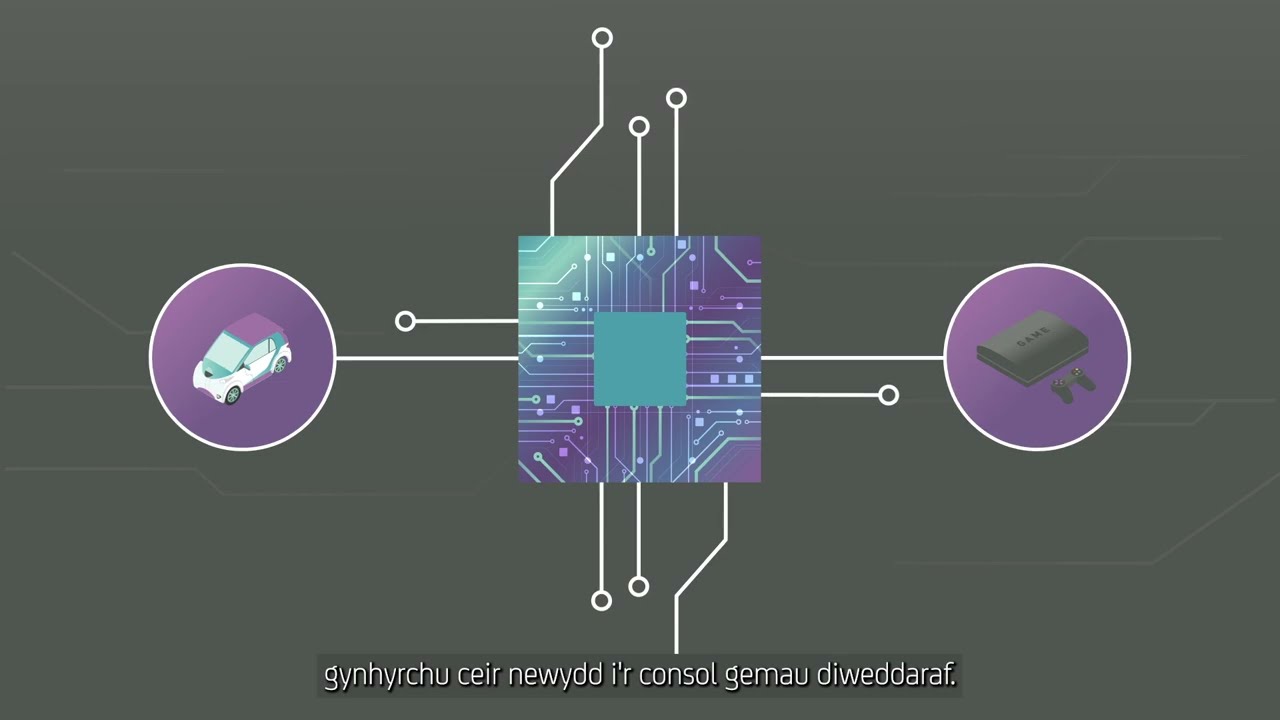
Compound semiconductors are materials made by combining different elements to create properties that make them particularly useful in applications involving light, high-frequency communications, and high-power electronics. They complement conventional silicon technologies and are critical to areas including communications, sensing, electric vehicles, renewable energy, healthcare, photonics, and quantum technologies.
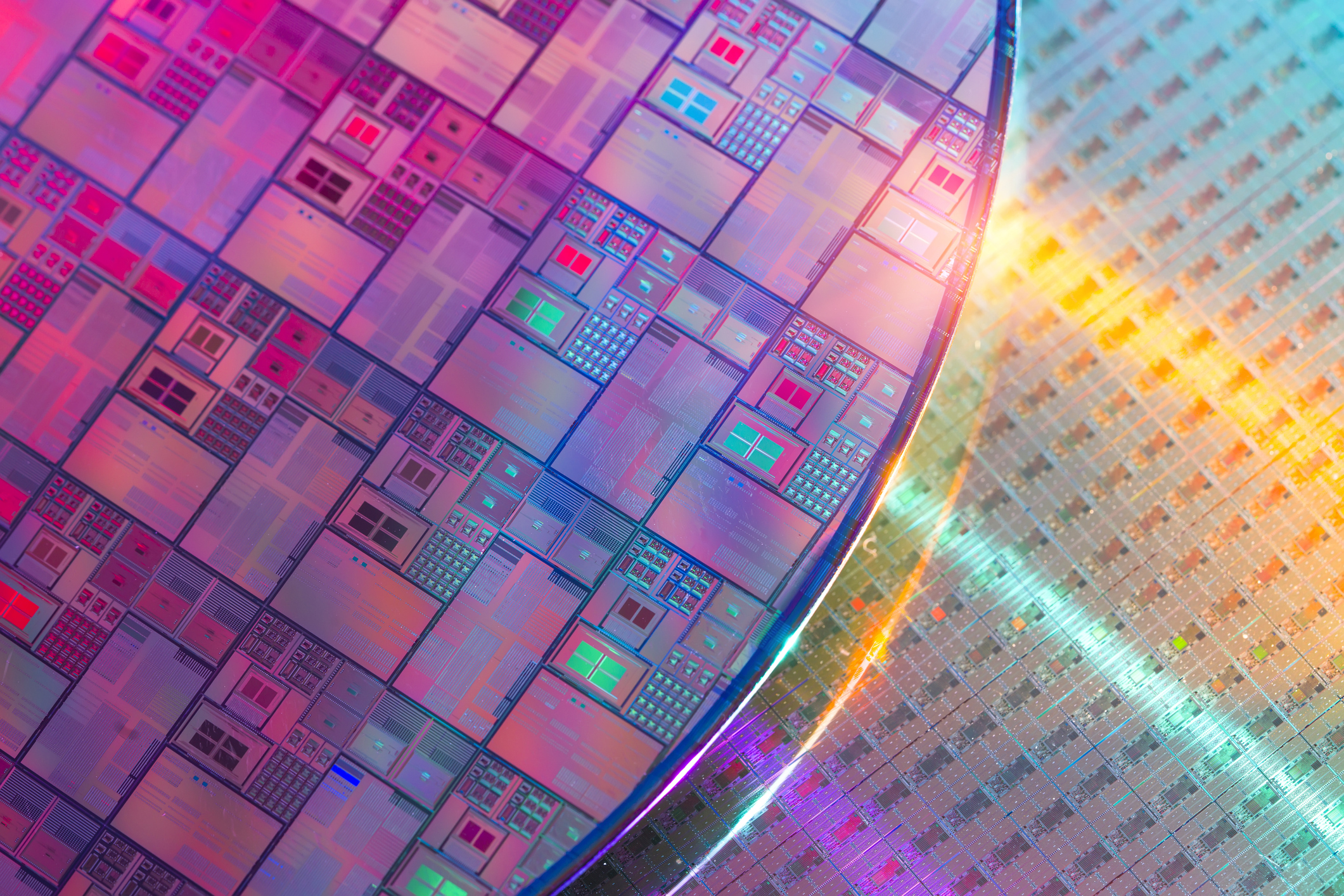
South Wales had been developing expertise in the field for decades before CSconnected was established, with capabilities spanning academic research, semiconductor design, wafer manufacture, device fabrication, and industrial production.
The challenge was to connect those strengths.
Launched in November 2020, the £43 million CSconnected SIPF programme, led by Cardiff University, was designed to do precisely that. Supported by £25.4 million from UKRI, alongside industry and regional investment, it brought together partners from across academia, industry, and government to strengthen research and development, skills, infrastructure, supply chains, and international visibility.
The programme delivered four major collaborative research and development programmes, focused on next-generation optical communications and sensing, large-scale GaAs-based wafer manufacturing, novel semiconductor fabrication tools, and advanced processes for 5G and electric and autonomous vehicles.

“CSconnected has helped turn South Wales’ longstanding strengths in compound semiconductors into a connected, globally recognised ecosystem, creating the infrastructure, skills and partnerships needed to translate world-leading research into economic impact.”
— Professor Roger Whitaker, Pro Vice-Chancellor for Research, Innovation, and Enterprise, Cardiff University
Cardiff University has played a central role in translating research expertise into industrial capability.
Through ICS, established in 2015, the University has developed an open-access environment where researchers and companies can work together to develop, test, and manufacture compound semiconductor devices.
One of the programme's most significant achievements was the development of a full fabrication process around 200mm (8-inch) VCSEL wafers in collaboration with IQE. IQE subsequently announced the world's first 200mm VCSEL epiwafer for wireless, sensing and display markets, with the work supported by CSconnected SIPF. The larger wafer size creates opportunities to move VCSEL technology beyond smartphones and into a broader range of connected devices.
Cardiff researchers have also contributed to advances in fabrication techniques, including high-uniformity Distributed Feedback (DFB) gratings and epitaxial waveguide overgrowth. Research arising from programme activity has generated 92 Cardiff University conference and journal publications.
These developments illustrate the importance of the cluster model: advances in semiconductor technology depend on close interaction between material suppliers, researchers, equipment manufacturers, device designers, and companies capable of taking technologies towards commercial production.

We are building a new generation of semiconductor infrastructure
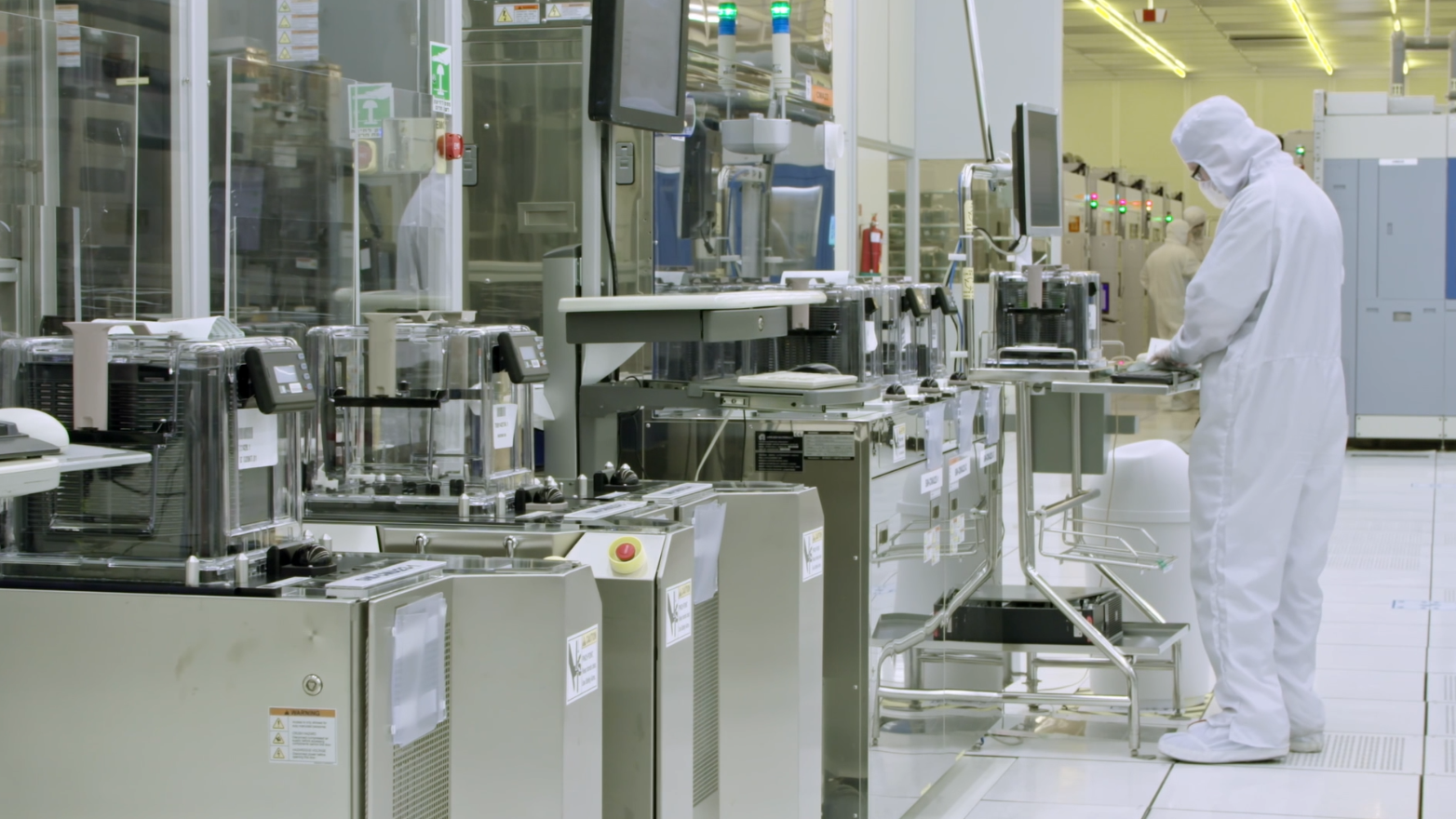
One of the most tangible legacies of this approach is Cardiff University’s Institute for Compound Semiconductors (ICS) cleanroom.
The purpose-built 1,500m² facility, which opened in 2023 as part of the University's Translational Research Hub, enabled ICS to scale its fabrication capability from 150mm to 200mm wafers. It provides end-to-end processing, from wafer inspection and lithography through to deposition, etching, metrology, dicing, and back-end processing.
The facility is designed to bridge a critical gap between laboratory research and industrial manufacturing, allowing researchers and businesses to develop and refine complex processes on wafers at a scale that is commercially relevant.
For Professor Smowton, this industrial focus has always been central to ICS.
“Right from the start the ICS aimed to be industrially relevant,” he said. “Our new cleanroom has enabled us to put that philosophy into practice. Partner companies manufacture in our facility, and it enables entrepreneurs and start-up companies to try new ideas quickly without having to first develop the equivalent of our facility, equipment and world leading semiconductor manufacturing expertise. However, its importance goes beyond even that – we now have academics and researchers with an ‘invent to manufacture mindset’. The strong academic-manufacturing links are essential to keep UK industry growing and secure the most exciting and rewarding jobs for our young people.”
The cleanroom is part of a much wider investment in semiconductor infrastructure across South Wales. Swansea University's Centre for Integrative Semiconductor Materials (CISM) opened in 2023, bringing together semiconductor and advanced materials research, prototyping, and process development. In Newport, KLA opened a $138 million R&D and manufacturing centre in 2025, while work is under way on a dedicated CSconnected cluster headquarters alongside the Compound Semiconductor Applications Catapult. At Cardiff Gate Business Park, Centre 7 provides 51,000 sq ft of flexible laboratory, office and manufacturing space for semiconductor supply-chain companies and inward investors.
Together, these facilities provide capabilities ranging from research and prototyping through to advanced manufacturing, helping companies access infrastructure that would be difficult and expensive to establish independently.
We are developing the people behind the technology.
Infrastructure alone cannot create a successful technology cluster. CSconnected has invested heavily in developing the specialist workforce needed to sustain future growth.
The programme has developed a suite of Continuing Professional Development courses covering areas including semiconductor supply chains, cleanroom practice, electronics, photonics, etching, and wire bonding. The 2026 CSConnected impact report records nine CPD courses developed and delivered through the programme, with provision designed to support both upskilling and reskilling.
Alongside professional training, CSconnected has worked with schools, teachers, and careers advisers to raise awareness of semiconductor careers. Initiatives such as Sparking STEM Futures and more recent school-based qualifications are helping to create a pipeline from school and further education through to university, apprenticeships, and employment in the industry.
This will become increasingly important as the cluster seeks to grow its skilled workforce from its current level towards 6,000 people by 2030.
The economic impact provides the clearest indication of what the programme has achieved.
Since 2020, total Welsh employment supported by the cluster has increased by 51%, from 2,085 to 3,140 jobs, while Welsh GVA has risen by 153%, from £172 million to £436 million. In 2025, the cluster directly employed 1,914 people, with a further 1,226 jobs supported through its wider economic footprint.
The sector is also highly productive and internationally focused. Average salaries are approximately £66,000, more than 95% of employment is full-time, and around 19% of the workforce is engaged in research and development. The cluster supported £567 million of GVA across the UK in 2025, with around 77% of that value retained in Wales.

“The compound semiconductor cluster continues to show resilience and sustained growth. While other parts of manufacturing have faced considerable challenges, this sector has expanded employment, increased productivity and strengthened its wider economic contribution.”
— Professor Max Munday, Cardiff Business School
The conclusion of the UKRI Strength in Places Fund programme is a transition, rather than an ending.
One of the programme's lasting achievements has been to establish CSconnected as a dedicated organisation with a remit to continue coordinating and promoting the cluster, attracting investment, and supporting future growth. The 2026 impact report describes the SIPF programme as having created an internationally recognised ecosystem in which industry, academia, and government are increasingly operating as a coordinated community.
The ambition for the next phase is substantial. CSconnected aims to grow cluster revenue to £1 billion and skilled employment to 6,000 people by 2030, while ensuring that more of the value created by the industry is captured within regional supply chains.
Professor Dame Jessica Corner, Executive Chair of Research England, said: “The UKRI funding from the Strength in Places Fund has seen our ambition of growing and building in Places put into action by CSconnected, who have become a thriving, competitive semiconductor cluster for the UK.
“Bringing together the strong partnerships and extensive collaboration within the semi-conductor cluster in South Wales has powerfully supported economic productivity, creating over 500 new jobs and over 40 new products. I look forward to CSconnected building on this success as it moves into its next phase of development.”

Find out more about our research
Get our newsletters from Cardiff University's research, innovation, and enterprise leaders.
For Cardiff University, the programme has reinforced the University's role at the heart of a strategically important industry – one that is helping to shape technologies from advanced communications and AI to clean energy, healthcare, and quantum technologies.
What began as recognition that South Wales' semiconductor expertise could achieve more by working together has developed into a globally recognised cluster with a growing economic footprint, world-class research and manufacturing infrastructure, and a skilled workforce.
Professor Roger Whitaker, Cardiff University’s Pro Vice-Chancellor for Research, Innovation, and Enterprise said: “The Strength in Places Fund has demonstrated what can be achieved when universities, industry and government work together around a shared ambition. CSconnected has helped turn South Wales’ longstanding strengths in compound semiconductors into a connected, globally recognised ecosystem, creating the infrastructure, skills and partnerships needed to translate world-leading research into economic impact.
“As we look ahead, that foundation gives us an exceptional opportunity to grow the industry further and ensure South Wales remains at the forefront of the technologies that will shape our future.”
As the SIPF-funded phase comes to an end, the foundations are firmly in place for the next chapter.
The challenge now is to build on that collective strength – and ensure that the innovation, investment, and high-value jobs created by the semiconductor technologies of the future continue to benefit South Wales and the wider UK.