

Changing lives with archaeology
Community in Cardiff learns about its past while building a better future.
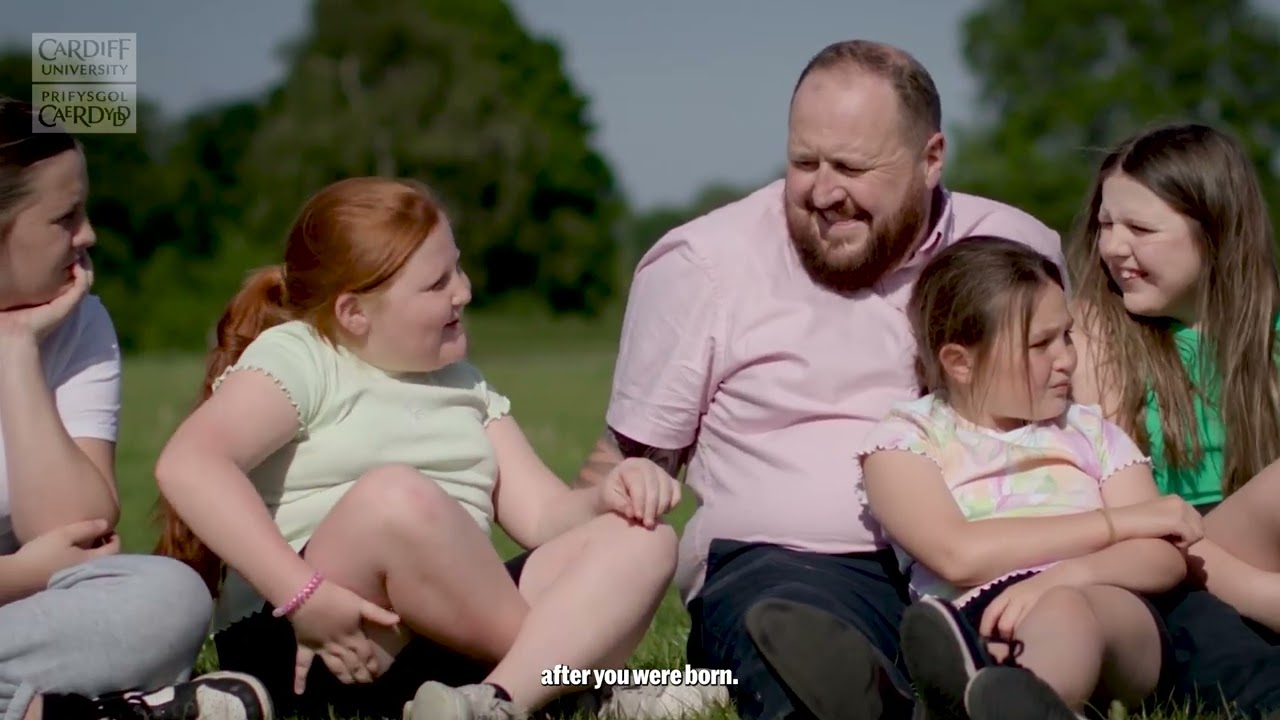
Scott Bees has come a long way. Five years ago, the 36-year-old dad-of-five was delivering letters around his community. When lockdown hit, he decided to take a short history course to fill his time in the evenings.
That decision led him to volunteer with the CAER Heritage project, which works with the people of Caerau and Ely to uncover history and promote the benefits of lifelong learning. Before long, Scott was embarking on an Archaeology degree, which he has now graduated from with First Class Honours.
“Five years ago, I was posting bills through letterboxes; now I’m carrying out research that’s not been done before and looking forward to starting my master’s degree,” says Scott. “This life had never seemed an option for me. I had kids very young and thought university was out of my reach. Going back into education is one of the best things I’ve done.”
Speaking from Trelai Park, Caerau, in the Welsh capital, where he has carried out archaeological excavations with fellow students, Scott says: “I’ve always been a bit of a keen storyteller. I grew up with a passion for history – I remember listening to my grandfather telling me stories about the war when I was a child. “Since coming back to it as an adult, it’s been a bit of a journey for me. It’s taken me back 4,000 years and changed my whole outlook on life in the process.”

Changing the narrative
CAER Co-Director, Dr Dave Wyatt, says Scott’s story is a great example of the transformative power of higher education.
“As someone who also completed my degree later in life, I feel really strongly about the importance of providing chances for people from all backgrounds to experience higher education. It brings such joy and satisfaction, as well as opening up amazing new career and life opportunities. That’s what led me to establish Exploring the Past: an open-access pathway that helps adult learners like Scott return to learning and progress them onto degrees in history, archaeology, and religion in Cardiff.”
It was also this conviction that led to the start of the CAER Heritage Project in 2011. Caerau and Ely are areas of the city that have experienced social deprivation, with a low percentage of people going into further and higher education. But conversely, it is also an area rich in history, with an Iron Age hillfort having received little attention.
“I first heard about Caerau Hillfort from talking to friends at the pub and became interested from there,” says Dave. “It’s an amazing site – it’s got incredible archaeology, yet it is next to communities facing massive challenges, but which are full of talent, activism, and knowledge. That’s what drew me in – the hillfort really is an incredible asset for community development and for opening up opportunity.”
The hillfort is overlooking one of Cardiff’s main traffic arteries, the A4232. Just a stone’s throw from Ely and Caerau, a short walk through some trees and up a hill takes you to an area of green land that holds answers to the origins of Cardiff.
CAER Co-Director Dr Olly Davis reflects: “When you get up there, you feel like you’re away from the urban sprawl. The environment completely changes. You can see the houses and the streets below. It’s so peaceful. Much more than that, it was clear to us that it was an untapped area for tracing the history of the city.
“I began discussions with Action in Caerau and Ely (ACE) about what we might be able to do to harness this site for the benefit of the community. Initially, we started with a meeting, bringing in Glyn Derw High School, which has since been replaced by Cardiff West Community High School. “The initial mood in that room was very positive. We weren’t thinking too far ahead at that point – it was more about what we can do now, starting small.”
Working with young people
The early focus of the project was about engaging with young people from the area. “We wanted young people to connect with the site so we took groups up there,” Olly says. “It’s still the same now when we take people there – there’s a wonder and a kind of excitement. From there, we started to do archaeology digs, which uncovered different aspects of its history. We were starting to build a positive story and profile for the site.
“Our whole approach from the beginning was an emphasis on co-production – where everyone is working together to a shared goal. That has always been ACE’s strategy too.”
Sam Froud-Powell, Operational Development Manager at ACE, agreed: “Looking back at where the project started from, the success has been dependent on the buy-in from the whole community. It’s been about building relationships and connections, as much as it’s been about investigating our history.”
A series of grants have put much needed funds into the area and allowed the team to carry out community digs, getting people of all ages and backgrounds involved in uncovering important finds.
Dave adds: “There was a real buzz about what we’d found out together – but where did it go from there? We realised we needed a real base for the community – a centre that could showcase the heritage we’d discovered while opening up local opportunity at the same time.”
A grant application was made to the National Lottery Heritage Fund. In 2019, the project was awarded funding to redevelop a nearby old Gospel Hall into a Hidden Hillfort Heritage Centre and space for community groups. The building on Church Road, Caerau, is now a thriving hub for community learning and heritage-based activities. A series of heritage trails and signs help people explore and understand the site, along with a new, themed children’s playground and gardens.

History, Archaeology and Religion at Cardiff University
We enable the brightest and best to explore and share their passion for past societies and religious beliefs, from prehistory to the present day.
New opportunities
In recent years, as knowledge about the site has grown, so has its research scope, with activities moving to Trelai Park less than two miles away.
Already known to be the site of a Roman Villa, geographical surveys taken ahead of planned work to the playing fields threw up a new mystery. Volunteers and students were on hand to investigate.
After four digs at the location, which is yards from Cardiff West Community High School, a number of exciting discoveries have been made.
These include a large, well-preserved Bronze Age roundhouse as well as a smaller structure close by. Three burial sites have also been uncovered. The next few months will be spent sifting through the materials found from the dig, with volunteers helping to clean artefacts at the heritage centre.
Olly says: “Trelai Park is another example of how rich in history this area is – it’s a site of national significance. This year’s dig was our most successful yet. More than 400 people attended our open day, with 200 schoolchildren visiting the site and 400 volunteers and students being involved in the dig itself. But there is nothing in this park to recognise the incredible structures lying underneath our feet. There is so much that could be done here to make it a viable heritage tourism spot.”


Making a difference
Alice Clarke, 36, who lives in Caerau, has been volunteering with the CAER Project for five years.
Speaking from this year’s dig, she said: “It’s really fascinating. We’ve found a lot of quartz here so far. I will also work at the CAER Heritage Centre after the dig, cleaning all the finds that come in big bags. I love doing it. It’s given me confidence – it’s nice to get out and meet friends.”
Linda Burnell, a retired business owner from Canton, said: “I can’t wait for summer each year. I’ve learnt so much here and it just connects me to this environment and to the community.”
Local photographer Vivian Thomas, who has documented the digs over the years, says: “Coming together every year for the dig has built my self-esteem and given me a purpose. It feels like one big family as we work together to uncover the story of those who have trodden the ground before us. I have learned so much about the area by chronicling the team’s work, and I’ve been able to develop my camera skills further too. CAER should be applauded for what it does for our community.”
Mike Tate, headteacher of Cardiff West Community High School, adds: “As a school, we see real value with our links to this project. Our pupils learn about the history of the area in which they live, and they literally get their hands on the past. The experiences through the project bring subjects in school to life and can ignite engagement for our pupils. We are really pleased to continue this work.”
Cardiff University student Dan Queally, who graduates with a BA in Archaeology, chose to do his dissertation on the CAER Project, and spent a year volunteering at the CAER Heritage Centre. He said: “I’ve loved meeting the volunteers who come to the centre week in week out to help clean and categorise finds. I’ve enjoyed the chats over cups of tea. It’s not just the archaeology that I’ve learned about, it’s seeing the difference a project like this can make to people here and now. It’s been a big perspective shift for me.”
Sam from ACE says the project is going from strength to strength. “The annual community dig is a cornerstone of our partnership, uniting people from across Ely and Caerau to work alongside University students and staff. But the work doesn’t stop here. Throughout the year, events and sessions are held to bring people together. They might be into history, or just want the opportunity to develop skills and connect with others. Our role is about breaking down those barriers so that people believe anything is possible.”
Bright futures
CAER has developed a strong pipeline of student successes, with many volunteers going on to complete the Exploring the Past Pathway to Archaeology, before embarking on full degrees.
“This community has such amazing talent,” says Olly. “We see that in so many of the individual stories to come out of the project. Volunteers get the chance to meet our current degree students. It’s a brilliant experience for our students, who get to see the real impact of archaeology on a community. Everyone is learning together.”
Dave adds: “I don’t think anybody in the room in that initial meeting envisaged where we would end up today. Our heritage centre is now an amazing hub for the whole community. And the archaeological finds just keep coming. The potential here – in so many different aspects – is immense. Long before universities were linking their research, education, and social development, CAER was doing it. We’ve shown that when you bring these missions together, powerful things can happen.”
Graduate Scott agrees: “I feel so lucky to have been involved with the CAER Project. I’m now a massive believer in lifelong learning. There should be no barriers for anyone.”
Additional pictures by Vivian Thomas.

Pathways to a degree
We have developed a number of pathways to help you study for an undergraduate degree with us.
News
Read more about the CAER heritage project.


Publications
- Davis, O. et al. 2019. CAER heritage: legacies of co-produced research. In: Graham, H. and Vergunst, J. eds. Heritage as community research: Legacies of co-production. Policy Press. , pp.129-148.
- Davis, O. and Sharples, N. 2024. Caerau, Trelai Park, Middle Bronze Age Enclosure (ST 14714 75875). Archaeology in Wales 62 , pp.95-96.
- Davis, O. and Sharples, N. 2020. Excavations at Caerau Hillfort, Cardiff: towards a narrative for the hillforts of southeast Wales. In: Late Prehistoric Fortifications in Europe: Defensive, Symbolic and Territorial Aspects from the Chalcolithic to the Iron Age: Proceedings of the International Colloquium 'FortMetalAges', Guimarães, Portugal. Archaeopress. , pp.163-181.
- Davis, O. and Sharples, N. 2024. Trelai Park, Cardiff: An interim report on the 2023 excavations. Project Report.Cardiff: Department of Archaeology & Conservation, School of History Archaeology and Religion, Cardiff University.
- Davis, O. et al. 2023. Trelai Park, Cardiff: An interim report on the 2022 excavations.