Skip to content
Skip to navigation menu

Research

The Cardiff School of Earth and Ocean Sciences is a large international research School. It accommodates over 100 personnel, including over 30 leading international research scientists and a postgraduate research school of some 35 students. These researchers are addressing some of the most significant research themes in world science at the moment, including global change, biosphere-hydrosphere-geosphere interactions, environmental science, natural resource exploration, and the evolution of the Earth and its biosphere. The School achieved a grade 5 rating in the 2001 Research Assessment Exercise. It published some 800 papers in international journals and raised over £11M of research income over the period of the upcoming assessment.

Research in the School is now organised into five Research Groups:

Geobiology

The group focuses on Systematic and Phylogenetic Studies, Palaeobotany and Geomicrobiology

Working in the 3d seismic lab.
Geodynamics

The group focuses on 3D Seismic Studies, Mantle Studies, Structural Deformation Studies and Carbonate Platform Studies

Resistivity Survey, Svalbard 2005.
Geoenvironmental

The group focuses on Earth Surface Processes and Marine and Coastal Environments

Collecting large samples from the sea.
Magmatic and Hydrothermal Processes

The group focuses on Magmatism and Geodynamics, Sulphide Research and Geochemical Fingerprinting.

The rig at TDP site 4 (Ras Tipuli, Lindi)
Palaeoclimate

The group focuses on Cenozoic Global Climate Change, Thermohaline Circulation, Antarctic Sea Ice and Marine Environments, and Marine Microfossils.


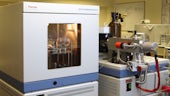
Recent expansion of the School in the geomicrobiological, geoenvironmental and climate change fields reflects a focus on areas of rapidly emerging science and societal relevance. This research is underpinned by state-of-the-art Research Facilities for trace element and stable isotope geochemistry, geomicrobiology, particulate analysis, electron microscopy, 3D seismic interpretation and visualization, and parallel computing.

In addition to its many on-land activities, the School has a long-standing international reputation in marine science which led to its twice running international offices of Ocean Drilling Programs: the JOIDES Office in the 1990s and the ESSAC Office in 2005-2007. The school plans a lead role in setting up a Cardiff University Climate Change Centre with a significant focus on the marine climate record. Members of the School regularly lead, and participate in, international research cruises and the School has its own coastal research vessel, the Guiding Light.