Any Questions?
|
|
Technical geological information is required for all geo-environmental site investigations, ranging from designing foundations to assessing contaminated land. In the developed and developing world, large areas of derelict industrial land are now being remediated for other uses, and in such areas site investigation demands the integration of both geotechnical and geo-environmental skills. Additionally, environmental protection and sustainable development now underpins legislation in most countries. Typically, individual projects involve elements of geotechnics, ground contamination and environmental assessment. It is this integrative approach that forms the basis of this MSc programme.
The Cardiff MSc in Applied Environmental Geology is focused on providing students with skills appropriate to a career with geo-engineering and geo-environmental consultancies, with regulatory authorities and government.
|
Students will be equipped to:
Teaching runs from October to April. Subject areas include:
Students may specialise during their five-month project period, which is undertaken in association with an industrial partner.
![]() |
South Wales provides a wide range of geoenvironmental and geotechnical case studies and site visits. For the academic year 2011-2012 the students have undertaken 10 field visits and associated field work. This includes site visits to Cardiff Bay, AMD Big Pit and landslides in the South Wales Valleys. Field work includes surveying in Cardiff Bay, rock engineering in Swansea , site investigation at Porthkerry and Bournville landslide, contaminated soil studies at Barry Docks and the Bryn Pica landfill. There are no additional fieldwork costs, and the day trips typically start at 9:30 and finish at 16:30
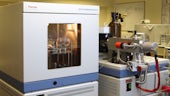
The students will also be involved in laboratory work covering several modules (the two geo-engineering modules and water in the environment). This includes standard laboratory tests covering the physical and mechanical properties of soils and water flow experiments to learn hydrologic and hydrogeologic concepts. The School has excellent geochemistry, geotechnical and IT laboratories and access to additional analytical facilities in the University.
![]() |
You will use numerical tools to solve real world problems. This includes software such as CorelDraw, mapping with Surfer, geo-engineering software Rockscience and Landsim and hydrogeologic modelling using MODFLOW. Finally, you will also develop transferable skills such as report writing, oral presentations, data processing, and technical drawing.
Contact Dr Emma Paris (MSc Administrative Officer) and read the frequently asked questions. Email: ParisEC1@cf.ac.uk; Telephone: +44(0)29 208 70189.
© Cardiff University
Cardiff University is a member of the Russell Group of universities. Cardiff University is a registered charity. No. 1136855