Environmental Geoscience (BSc)
UCAS Code: F642 or F644 (with a placement year)
South Wales is a great place to study environmental geoscience. Within easy reach of Cardiff, and also within the city itself, there is a wealth of natural and man-made geoenvironmental subjects to study. These natural locations range from the beautiful Welsh coastline up to the scenic mountains of the Brecon Beacons, including eroding sea cliffs, sand dunes, wetlands, valley slopes and past glacial erosion. With a long and heavily-polluting industrial history, south Wales offers study sites that include landfills, heavy metal contamination, acid mine drainage, derelict land and mining subsidence. The environmental geologist is at the forefront of the scientific community’s efforts to understand our complex and changing surroundings. Furthermore, the challenging and growing market of contaminated and derelict land remediation is a growing source of employment for geoscientists.
At the start of the course you will be taught how our planet works, and how natural and man-made events interact with, and change, the environment. You will learn about global systems like climate, how they work today, how they have operated in the past, and are expected to change in the future. You will also learn about man-made issues like pollution; its causes, assessment, monitoring and clean up. During this year you will be taught how our planet is dynamic and constantly changing, and how we need to evolve from activities that are depleting finite resources towards policies of sustained development.
In the second year you have a choice of modules depending upon your own geoenvironmental interests, aspirations, and the subjects that most interested you in the first year. You can choose a more ‘applied’ degree character that includes modules that will facilitate your understanding of site-specific geoenvironmental issues, such as contaminated land, rock engineering and geotechnics. Alternatively you may choose modules addressing ‘global’ geoenvironmental issues providing a base for studies on subjects like climate change and sea level rise, or you may choose to specialise in biological interaction with past and present environments. Regardless of your choices, you will be taught the skills required for planning, executing and reporting on project work. This will include both field-based and desk-based studies, and working independently and as part of a team.
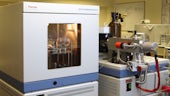
At this stage of your studies, project work is a very important component of the course. The Environmental Geoscience Teaching Team provides a list of different projects from which you can choose a subject that interests you, however students are actively encouraged to devise and design their own projects. Students often choose or devise projects that relate to geoenvironmental issues close to their homes or that have impacted on their lives in the past. Often the projects are undertaken with help and advice provided by bodies such as the Local Authorities or Environmental Agency. Dedicated environmental training takes place around Easter, and this addresses issues that have not been covered in previous modules. This is also an opportunity for you to start acquiring more specific skills that will be required for your own project work. For example, if you undertake a project that requires you to do geochemical analyses, you will be taught the protocols required to work in a modern state-of-the-art geochemical facility.
In the third year you will complete your project work, presenting it in the form of a professional report. There are a few compulsory ‘core’ modules, but the majority are now optional, allowing you to target those subjects in which you are most interested. As with the previous years, the third year consists of a mixture of taught knowledge and skills, however, in this final part of your degree, the emphasis is much more on synthesis, tying together the separate strands to give a more complete and holistic understanding of the subject.
More details about this course can be found on the Coursefinder.