Double Success for BIOSI Lab
17 May 2012
2012 has started off very well for the Lloyd-Evans lab here in the School of Biosciences (Pathophysiology and Repair Division). Firstly with a Marie Curie Intra-European Fellowship Award that will provide funding for Dr. Karen Finn (PhD from NUI Galway) to start a post-doctoral position in the Lloyd-Evans lab for 2 years studying lysosomal diseases and diseases of lipid metabolism. Perhaps the most exciting part of the project is the potential for some of the therapeutic approaches outlined in the study to be rapidly translated to the clinic within the timeframe of the award.

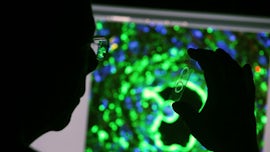
Dr Emyr Lloyd-Evans and Dr Karen Finn in their tissue culture lab in the School of Biosciences.
They have recently discovered a link at the cellular level between two rare paediatric diseases, Niemann-Pick C (NPC) and Smith-Lemli-Opitz Syndrome (SLOS). NPC is a disease where cholesterol and other lipids accumulate within the lysosome. SLOS is a multimalformation disease attributed to an inborn error of cholesterol synthesis, characterised by severe birth defects, neurological decline and a high prevalence of autism. The data suggests that accumulation of a sterol precursor in patient-derived SLOS cells functionally inhibits the NPC1 protein, leading to an NPC disease-like phenotype that negates the therapeutic effect of elevated dietary cholesterol in SLOS. This discovery has important implications both conceptually and clinically.
Collectively, rare diseases affect ~26 million people in the EU. This project meets an important and current FP7 Health thematic priority namely “Translating research for human health”. This fellowship represents a significant landmark for both Dr Finn’s transition from basic to translational research and the Lloyd-Evans laboratory’s aims of developing novel therapies for these devastating diseases.
Further news is that Dr Emyr Lloyd-Evans has also been awarded the Basil O’Connor Starter Scholar Research Award from The March of Dimes. It is a charity established by Franklin D Roosevelt in 1938 and as such is rarely given out side the United States of America. The charity’s mission is "to improve the health of babies by preventing birth defects, premature birth and infant mortality". The awards are funded in a program specifically designed to support scientists just embarking on their independent research careers. Created in 1973 and named for the first March of Dimes chairman and president, this program provides funding to young investigators to start their own research projects on topics related to the March of Dimes mission. It has often been the start up grant of Nobel laureates….So watch this space!
Dr Lloyd-Evans has said “Both of these awards will have a tremendous impact on our research into lysosomal and affiliated diseases. Research into rare diseases is incredibly important as it is estimated that rare diseases affect as many as 1 in 17 people in the UK alone. Development of novel therapies will potentially aid both the sufferer and their families. It’s great news that our research is being supported by these prestigious funding awards".
For more information: