CASE
STUDY: ECUB
project (rehabilitation of an old veterinary surgeon school into an urban
"Eco-centre", Brussels This
case study is also available in pdf format.
SECTOR: Holistic
COUNTRY: Belgium
BACKGROUND
At the beginning of the 20th century, the king of Belgium Léopold
1st decided to construct a veterinary school in the Cureghem's district,
in Brussels. The principal architect, Seroen, inspired himself from the
Hanover veterinary school and its suburban plan. A homogeneous unit of
20 buildings was then built on a 4 hectares' site. It was inaugurated
in 1910 with the Brussels universal exposition.
As the veterinary school has
been incorporated in the University of Liège, the school has to
move, and the site remains abandoned since 1990. The extent of the site
and its particular structure do not allow any easy re-conversion.
Finally, in 1998, a big Belgian
publicity agency, called AIR, became interested in the site and decided
to establish its offices in it. Nevertheless, the agency was aware of
the need of a global project proposal for the reassignment of the whole
site, park and buildings. In fact it would have been unhappy to dismember
such a homogeneous and remarkable architectural unit. Then, it was decided
to establish there an "Eco-centre".
The environmental "Eco-centre"
combines on the site numbers of different functions. The synergy between
them should allow the centre to contribute to the district's sustainable
development, in a social way too. The developers want to integrate in
an existing real estate complex, a diversity of functions, which would
mutually reinforced themselves to impulse a new dynamism in the district.

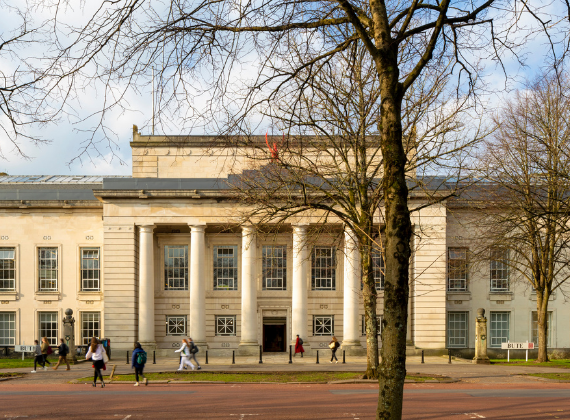
Figure 1:Old veterinary
school, Cureghem, Brussels
The project will have to integrate
the following dimensions:
- A balanced articulation
between ecological, social and economical development. The action in
favour of environment will be thought in an integrated approach, taking
account of the socio-economic characteristics of which it forms part.
This urban Eco-Center must also procure a social and economic benefit
- To promote sustainable development
by local tangible actions able to spread their positive effects.
- The concrete development
of eco-construction axis in building's construction and restoration.
A multi-functionality project that could lead to the district's revitalization.
- Various activities (offices,
social housing, companies' headquarters, sport infrastructure, congress
rooms, etc.) are planned in this urban area, leading to a diversified
occupation in space and time (diurnal/nocturnal). Taking the districts
characteristics and in particular the commercial activities into account,
any commercial activities will be developed on the site.
- A multi-actors partnership.
The project requires the mobilization of the public, private and associative
sectors.
- Concerning the public sector.
For a city like Brussels, different authority's levels must be implicated
and are already supporting the project : the communal, regional, but
also federal and European ones.
- Concerning the private sector.
Companies which are active in the environmental waste processing or
energy sector and companies known as "Eco-Dynamic", (certified
like such, or making notable efforts in favour of the environment) are
particularly implied in the project.
- Concerning the associative
sector. Environmental, socio-economic and socio-cultural associations,
as well as consumers associations might be involved in the project.
- Promote public transport
and urban mobility.
Eco-Center takes mobility/accessibility aspects into account, in particular
to answer the city congestion problems. A notable element is also the
proximity of the Midi station
- Provide information and
promote "Eco" principles.
- Develop a scientific research
axis ("new technologies" aspects in sustainable development).
INDICATORS
Until now, there aren't any genuine indicators established for this project.
However, several investigations
and studies were carried out on the zone:
- Social studies: district
inhabitants' interviews were carried out to know their needs, their
wishes but also the image the site conveys, etc. ...
- Economic surveys: investigations
were led to identify the potentiality of such a site located in a very
economically underprivileged area, etc. ...
- Environmental studies:
researches on new Eco-Construction techniques, mobility investigations,
etc. were done.
Moreover, to guarantee the
project's sustainable objectives, a total co-administration of the Eco-Center
will be formalized between the project's developer and the users of the
site. All the future tenants or owners will have to respect the established
sustainable development charter.
Potentialities of the
site
The site of "the Old School Veterinary surgeon of Cureghem"
presents various aspects, particularly interesting for this kind of project
:
- A large dimension (4 ha),
number of exploitable buildings as well as public spaces.
- The possibility to add new
built entities to the legally protected restored ones
- The situation at a walking
distance from the "Midi station" and the various existing
possibilities of public transport
- The situation in one of
the most underprivileged area of the Brussels-capital region, at the
hinge between an housing area and an industrial park (challenge for
the district)
- The area is designated
like "interest area" in the regional plan of ground assignment
(PRAS) of Brussels
- At the communal level, there
is a district contract ("Goujons-Révision") on the
area registered to the Communal Plan of Development (PCD). Then it profits
from a particular revival policy.
- The prestige of the site,
its historical and architectural interest
Figure 2 :Old
veterinary school of Cureghem situation.
EVALUATIONS
As the project is just beginning, we can only formulate some practical
remarks and observations.
- All the different
authorities' levels concerned by the project have been involved in it.
The project is then supported by a real political will which could play
a significant role in the operation's success.
- The success of
the project can partially be evaluated regarding the infatuation of
some companies known as "Eco" to belong to the project.
- To ensure social
cohesion with the district, the project's drivers consider as a necessity
local associations and NGO's to be present on the site. Some indirect
consequences:
- To maintain the
park, there will be a need of human resources. It was then decided to
set up a formation to give the district's inhabitants the possibility
to pursue this job.
- The non achieved
Cureghem's project, already lead to other development projects in the
district : HOT, PHILIPS, EUROSTATION. One could see there the trigger
effect that was expected.
BENCHMARK
DATA
The project data were rather based on personal experts' experiments into
different fields.
ARTIM is the contraction of ART and IMMOBILIER (real estate) - a company
of two shareholders, AIR (a great Belgian advertising agency) and J-M
GHISLAIN. Thanks to his environmental preoccupations and his experiment
in buildings and town planning J-M GHISLAIN could develop the project.
He has constituted an office of experts in various fields. Moreover, he
has developed a close cooperation with the IBGE, (the Brussels institute
for the environmental management) that includes many specialists in environmental
fields (air quality, waste management... ) and in assessment methods (consequences
on the neighbourhood population...)
LESSONS LEARNT
The large dimension and the particular structure of the site do not allow
easy re-conversion.
For this kind of project, 2 characteristics must be studied in-depth:
- The financial
feasibility.
- The permeability
of the site to the district.
The financial feasibility
aims to combine strong and profitable economic functions with weaker functions
like equipments and housing.
The permeability is considered both on the human and physical point of
view.
TRANSFERABILITY
The contextualisation of such a project is obviously very significant.
One particular aspect of this kind of sustainable development is the built
site singularity: high patrimonial, cultural, architectural value in a
very underprivileged district. In this case, the verification of the two
criteria stated above seems to be very significant.
IMPACT ON
SUSTAINABILITY AREAS
Environmental: MEDIUM (Eco-construction : used techniques but
also promotion and information).
Social: pretends to be HIGH (revitalization of the district, active public
participation, development of services, functions mixed, restoration of
a built site of high cultural value, etc.).
Economic: pretends to be High (re-dynamisation of the district, indirect
consequences).
PROJECT CONTACT
Malika Lebrun
IBGE - BIM
Service Actions sectorielles volontaires mlb@ibgebim.be
Gulledelle 100
1200 Bruxelles
Belgium
tel: +322775.78.06
fax: +322/775.77.98
J-M Ghislain
ARTIM
tel: +32475826226
Michael Royer
Veronica Cremasco
LEMA-University of Liege
Chemin des Chevreuils, 1 (bat B52/3)
4000 Liège
Belgium
tel: +3243669360
tel: +3243669367
fax: +3243669562
veronica.cremasco@ulg.ac.be
mroyer@lema.ulg.ac.be
REFERENCES
IBGE
"Eco-centre" in Cureghem, the sustainable development in urban
environment: from the planification to a the action and of the integrated
project of an Eco-district, Orientation sheet, june 2002
FÉDÉRATION BRUXELLOISE DE L'URBANISME
The renovation of the site of the old veterinary surgeon school,
Cahier de l'urbanisme Bruxellois, may 2002.
| Ecology |
|
Economy |
|
Social Aspects |
|
| Are
emissions to air, water and soil within the restrictions set locally
and internationally? Are the emissions decreasing? |
|
Is the cost/effectiveness
and/or cost/benefits of the system reasonable compared to other systems?
Compared to other needs in the city and to political goals? |
 |
Has the planning
and decision making for the infra-system been done in a democratic
and participative way? |
 |
| Management of
the site to reduce them (not enormous effect) |

|
Financial feasbility
studies. |
 |
Social enquiries.
Public brainstormings. |
 |
| Is the use of
natural resources reasonable compared to other comparable systems?Is
the use decreasing? (eg fossil fuels, water phosphorous, potassium) |
 |
Are the citizens
willing to pay for the services offered? Are the services affordable
to all citizens? |
 |
Is the function
and the consequences of the system transparent to and accepted by
the citizens? Is the system promoting a responsible behaviour by the
citizens? |
 |
| Monitoring of
the energy consumption. "Eco" construction. |
|
Social housing
Free public
equipment |
|
Inhabitant
formations.
"eco"
charter |
|
| Is the system
allowing a reasonable bio-diversity with regards to the kind of area
studied? Is the bio-diversity increasing? |
|
Is the organisation
(s) that finance, maintain and operates the system effective? |
|
Is the system
safe to use for the citizens? (hazards, health, well being) |
 |
| Rehabilitation
of the existing park but not the main goal |
|
Too early to
give comments |
|
Lot of effort
in this direction (well being) |
|
| Is the system
more or less sustainable than a conventional system regarding ecology? |
 |
Is the system
more or less sustainable than a conventional system regarding economy? |
 |
Is the system
more or less sustainable than a conventional system regarding social
aspects? |
 |
.
|